
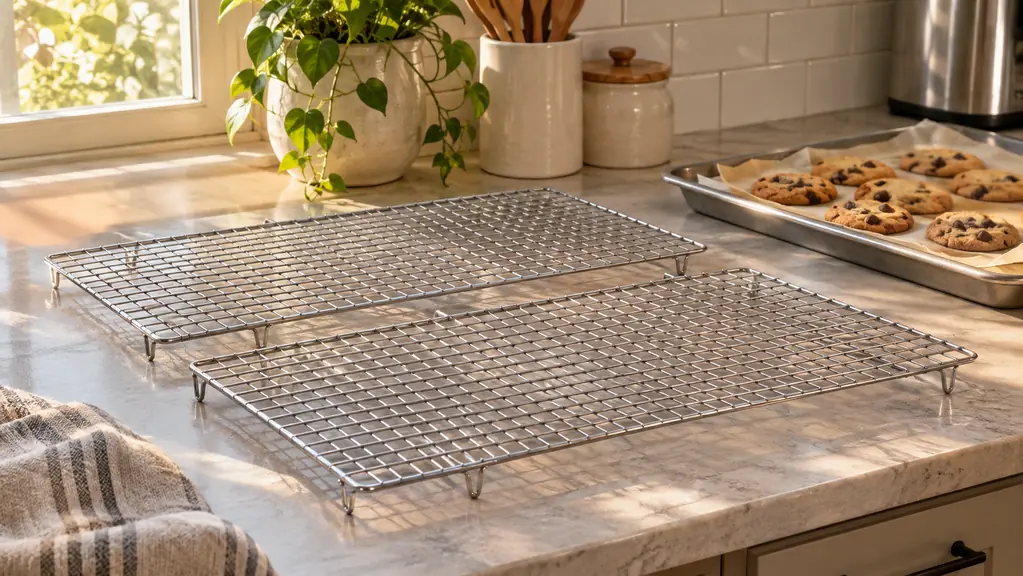
Our parish bake sale runs the first Saturday of December, and for about thirty years I started it the same wrong way. I pulled a hot sheet of cookies out of the oven, set the pan on the stovetop, and went back for the next batch. By the time I came back, the bottoms had sweated onto the pan. The cookies that should have been crisp were soft underneath, the bottoms that were supposed to be golden came out pale and damp, and the ones I stacked too soon stuck together like one big bar. Every year I told myself I would fix it. Every year I forgot.
I bought the Checkered Chef cooling racks about two years ago, mostly because the size I picked fits inside my Nordic Ware half sheet pans. Since then they have been through two Decembers of bake sale batches, a lot of Sunday dinners, and one very large roasted chicken that needed to rest before carving. This is what a season of bake sale batches taught me about them.
The Quick Verdict
A simple stainless steel rack that does its one job well: it cools cookies and cakes without bowing, rusting, or taking up counter space I do not have. Two years in, I would buy them again.
Amazon Check Today's Price →The rack that ended my soggy-bottom cookie problem
Two heavy-gauge stainless steel racks, no coatings to worry about, and a grid tight enough for small cookies. If your counter is full of sweating cookie bottoms, this is the fix I reached for.
Amazon Check Today's Price on Amazon →How I've Used It
I bake most weekends, and every November and December I go into production mode for the parish bake sale. That means a lot of cookies in a short window, with one standard electric oven that runs about fifteen degrees hot. I know that because my Taylor oven thermometer told me so, and it means my cookies come out of the oven ready to move, not ready to sit.
The Checkered Chef racks live inside my two Nordic Ware half sheet pans. That is the arrangement that works for me: I slide the rack into the pan, turn the whole thing out onto the counter, and the cookies land on the wire with air underneath them. When the rack is full, I lift it out, set it on the stovetop, and slide the next pan in. Nothing waits, and nothing sits on a hot pan longer than it has to.
I have used them for sugar cookies, molasses cookies, gingerbread, sheet cakes, and the occasional batch of dinner rolls. I have also rested a roasted chicken on one while the pan went back in the oven for the potatoes. The racks have never complained, and neither has the chicken.
Last December, on the Friday before the bake sale, I made four batches in one afternoon: two of sugar cookies, one of molasses, one of gingerbread. The oven ran from one o'clock until almost six, and the racks went from pan to counter and back so many times I stopped counting. The first batch was cooling on the rack while the last batch was still going into the oven, and by the end of the evening every cookie was in a tin, none of them stacked warm. That was the afternoon the racks proved themselves.
The Sunday dinner crowd is the other reason the racks stay out. When the grandkids come over, we usually make a sheet cake or a pan of brownies, and the rack is already in the pan before the batter goes in. It saves me from digging through the cabinet with flour on my hands.
Why a Cooling Rack Earns Its Spot on the Counter
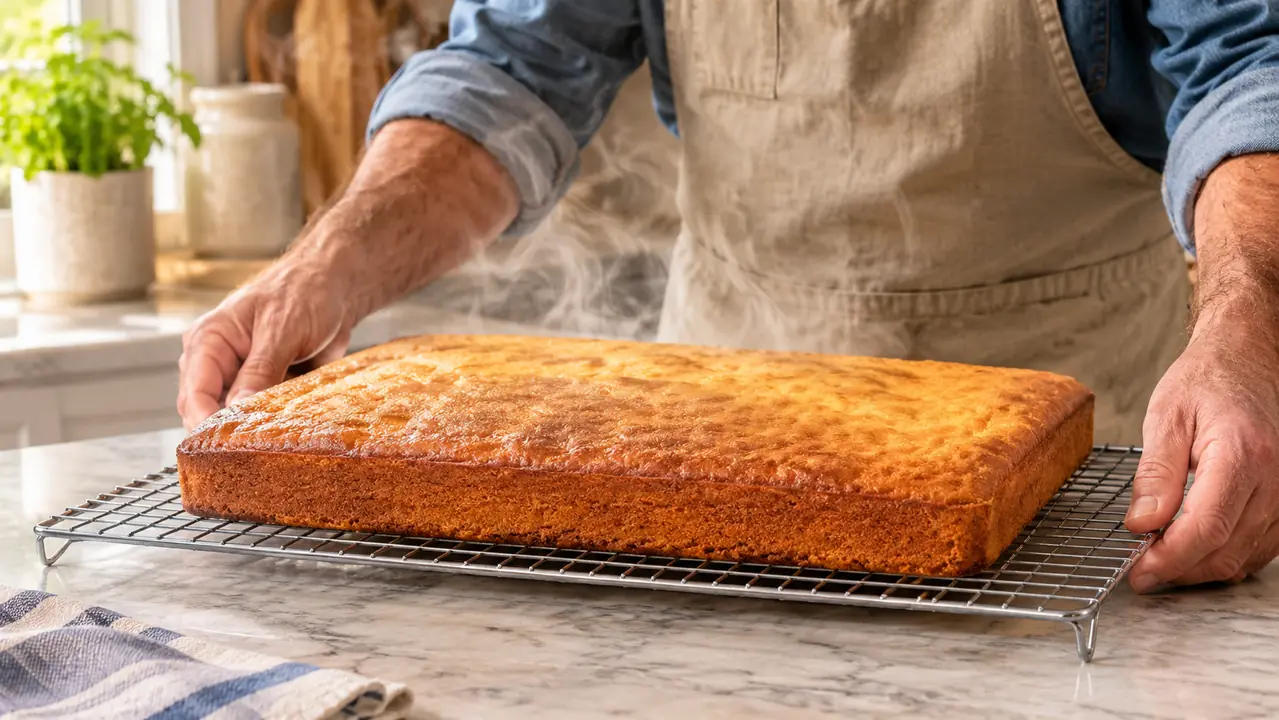
If you have ever left cookies on a hot sheet while you scoop the next batch, you know what happens. The bottoms keep cooking on the hot metal, and the steam from the warm cookie has nowhere to go, so the underside turns soft and pale. A cooling rack fixes both problems at once. The cookies come off the hot pan right away, and air moves under them, so they set evenly.
Before I bought these, I had one batch of jam-topped sugar cookies that I will not forget. I pulled the pan out, set it on the stovetop, and went to answer the phone. By the time I came back, the jam had softened the cookie bottoms, and I had to coax the whole batch off the pan with a spatula, most of them in pieces. That was the batch that made me order the racks. I have not had a repeat since.
The Checkered Chef racks are heavy-gauge stainless steel, and that matters more than it sounds like it should. A flimsy rack flexes when you lift it. A rack with a coating can chip or wear, and then you are scraping little bits of finish off your food. These have no toxic coatings, and after two years of near-weekly use, mine show no rust and no corrosion. I wash them by hand with soap and water, dry them, and put them back in the pan.
The grid is a tight crosshatch pattern. That is the detail I would tell any baker to check before buying a rack, because the cheap ones have wide gaps and small cookies fall straight through. I make small sugar cookies for the bake sale, the kind with a little dollop of jam in the middle, and they sit on this grid without trouble. So do the molasses cookies, which are soft and want to sag. Nothing has gone through, and nothing has stuck.
The Three Sizes and the One I Reach For
The set comes with two racks, and the line comes in three sizes. The Quarter size, 8 by 11 3/4 inches, fits toaster ovens and small trays. The Jelly size, 10 by 15 inches, pairs with jelly roll pans. The third size is the one I use: it sits inside my half sheet pans, so the rack and the pan take up exactly the same footprint on the counter.
That footprint matters in my kitchen. Ray and I downsized a few years ago, and the kitchen is small. I do not have a double oven, and I do not have room for a rack that sticks out past the pan or has to lean against the wall to dry. A rack that matches the pan means I can slide cookies onto it without hunting for a clear spot, and it stores flat in the pan between uses.
If you bake in a toaster oven, the Quarter size is the one to look at. If you bake on jelly roll pans, the Jelly size matches those. The important thing is to pick the size that matches the pans you already own, because a rack that does not fit your pan is just another thing taking up space.
How They Have Held Up After Two Years
The no-warp design has held up. I have set hot pans on the racks to protect the counter, rested a roasted chicken on one, and stacked a full sheet cake on another, and none of them have bowed. The Checkered Chef racks come out of the cabinet looking the same as they did the day they arrived, which is more than I can say for the cheap racks I used before.
I remember the chicken specifically because I was nervous about it. Ray had brought home a bird that was almost too big for the pan, and I had nowhere to rest it. I set the Checkered Chef rack across the top of the pan, let the chicken sit for a full twenty minutes, and when I lifted it, the rack was as flat as the day it came out of the cabinet. A cheaper rack would have bowed under that weight, and I would have been carving a lopsided bird.
The stainless steel has not rusted, even though I am not always careful about drying them right away. I wash them by hand, and sometimes they sit in the dish drainer while I finish the batch. Two years in, there is no rust and no corrosion, and the wire is as tight as it was on day one.
The only wear I can find is on me, not the racks. I have dropped one on the kitchen floor twice, and it made the kind of clatter that makes Ray come in from the living room to see what broke. Nothing broke. I picked it up, wiped it off, and put it back in the pan.
What a Cooling Rack Will Not Fix
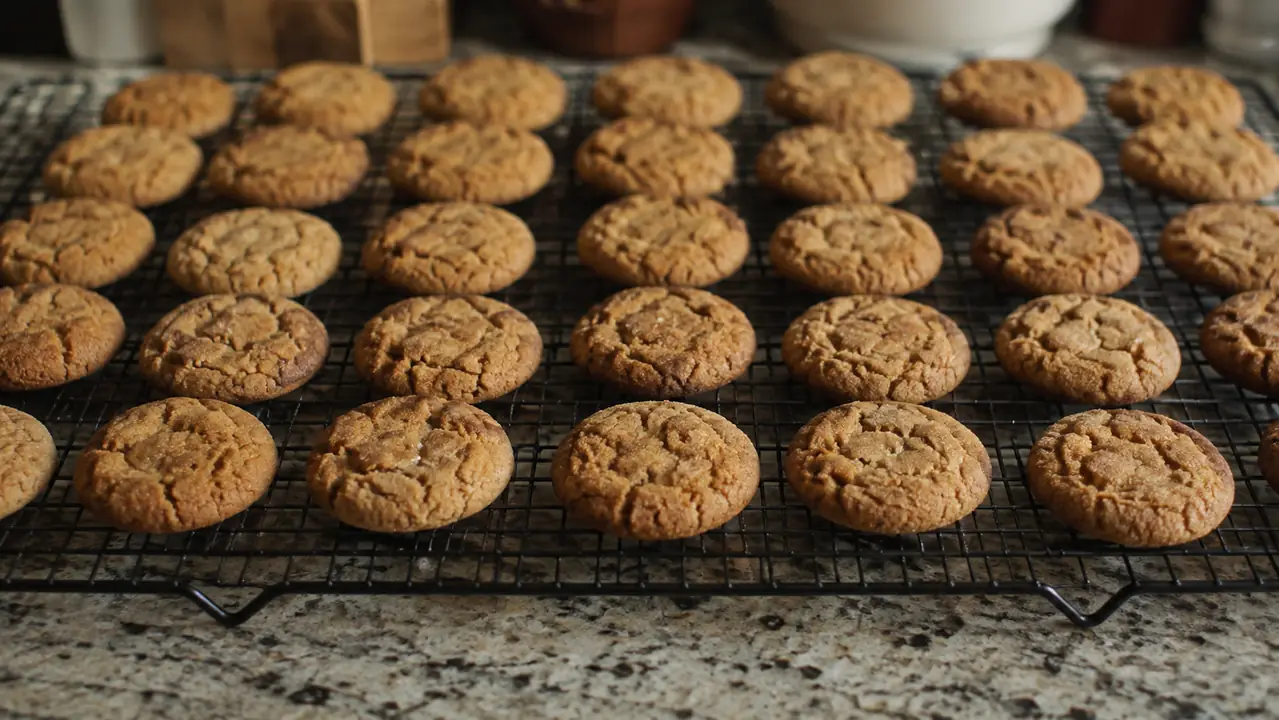
Here is the part I did not expect to learn from a rack: it will not fix a batch that went wrong earlier. If the dough was too warm and the cookies spread into one sheet, a rack cannot un-spread them. If the oven is running hot and the bottoms are already dark, moving them to a rack stops the damage but does not undo it. The rack is the last step in a chain that starts with the dough and the oven.
I keep my Taylor oven thermometer in the oven because mine runs fifteen degrees hot, and I chill my dough more than I used to. I weigh my flour with my Escali Primo scale, and I mix with my KitchenAid hand mixer, which I bought last September after my old one burned out mid-batch. The rack does its job, and the rest is up to me. That is not a complaint. It is just the truth about baking tools: they make the good batches better, and they cannot rescue the bad ones.
Practical Notes From Two Years of Use
One note about cleaning: the tight grid is a blessing for cookies and a small nuisance for batter. If a cake slid off the pan and onto the rack, or if a cookie cracked and left crumbs in the wire, a quick rinse does most of the work. Dried-on bits need a soak in warm soapy water for ten minutes, and then they lift right off. I have never put mine in the dishwasher, mostly because I do not trust the dishwasher with anything that has a tight grid.
The molasses cookies are the messiest thing I put on the racks, because they come out of the oven soft and slightly sticky. One cracked and left a smear of molasses across three wires. I let it dry, ran the rack under warm water, and the smear lifted off in one piece. Ten minutes in soapy water handles the worst of it, and I have never needed anything stronger than a soft sponge.
I also use the racks for things that have nothing to do with baking. A sheet of bacon drains on one most Saturday mornings. A pan of roasted vegetables rests on one before serving. And when the grandkids come for Sunday dinner and we make a sheet cake, the rack is already in the pan, waiting. That is the real test of a kitchen tool: you stop thinking about it and just use it.
One more thing: I can move a full rack with one hand, which matters when the other hand is holding a hot pan. A rack that needs two hands and a clear path is a rack I would not reach for.
What I Liked
- Heavy-gauge stainless steel with no toxic coatings, and two years in, no rust or corrosion
- Tight crosshatch grid holds small cookies, soft cookies, and jam-topped cookies without falling through
- Fits inside a half sheet pan, so it stores flat and takes up no extra counter space
- Two racks in the set, so one can cool while the other fills
- No warping after hot pans, a resting chicken, and a stacked sheet cake
Where It Falls Short
- You have to match the size to your pans; the Quarter and Jelly sizes are smaller than a half sheet pan
- Hand washing is easy, but the tight grid means dried-on batter needs a quick soak
- A rack will not fix cookies that spread or an oven that runs hot; it only fixes the cooling step
Two years of near-weekly batches, and the racks still sit flat, show no rust, and hold a small sugar cookie without a single one falling through.
Who This Is For
If you bake more than one batch of cookies at a time, you are the person for these racks. If you bake for a bake sale, or for the holidays, or for a family that expects cookies on Sunday, the second batch is where a rack earns its keep. You pull the first sheet, move the cookies to the rack, and the pan goes right back in the oven.
They are also for people with small kitchens. The racks fit inside my half sheet pans, so they store flat and take up no extra space. If you have a toaster oven, the Quarter size is worth a look. If you bake on jelly roll pans, the Jelly size matches those. Pick the size that matches the pans you already own, and you will reach for it every weekend.
Who Should Skip It
If you bake a dozen cookies once a month and eat them warm off the pan, you do not need a cooling rack. There is nothing wrong with that. A single small batch cools fine on the counter, and a rack is one more thing to wash and store. The rack earns its keep when you bake in volume. And if you only bake when the mood strikes, a rack that sits in the cabinet for months is not earning anything.
Skip them too if you already own a rack that fits your pans and has not warped. A second rack is nice, but it is not a new tool. And if your real problem is an oven that runs hot or dough that spreads, a rack will not solve it. Fix the oven and the dough first, then the rack does its part.
The rack that has survived two Decembers of bake sale batches
Two stainless steel racks, no coatings to worry about, and a grid that holds everything from small sugar cookies to a resting chicken. Two years in, I would buy them again.
Amazon Check Today's Price on Amazon →