I have a confession that will not surprise anyone who bakes a lot: my cookies used to come out different sizes every single weekend. Same recipe, same oven, same bowls, and one batch would be thin and lacy while the next came out thick and puffy. I blamed the oven, the butter, even the weather. Then my daughter watched me scoop a cup of flour by packing it down with the back of the spoon and said, very gently, that maybe the flour was the problem. She was right. A cup of flour can weigh anywhere from four ounces to six ounces depending on how it lands in the cup. That is a 50 percent swing, and no amount of careful leveling fixes it. I was skeptical at first. I had been baking for thirty years without a scale, and I figured my hands knew the feel of a good dough. But the flour problem kept happening, and I finally admitted that my hands were not the problem. The measuring cup was. That is why I finally bought the Escali Primo digital food scale, and why it has lived on my counter for about two years now.
The Quick Verdict
The Escali Primo is the scale I reach for every weekend. It weighs to the gram, fits in a drawer, and has survived two years of my small kitchen. It will not make you a better baker by itself, but it will make your flour honest.
Amazon Check Today's Price →Weigh your flour the same way every weekend
If your cookies and pie crusts come out different every time, the problem is probably not your oven. It is probably your measuring cups. The Escali Primo weighs to the gram and fits right on the counter next to your mixing bowl. Two buttons, no learning curve, and it has been on my counter for two years.
Amazon Check Today's Price on Amazon →How I've Used It
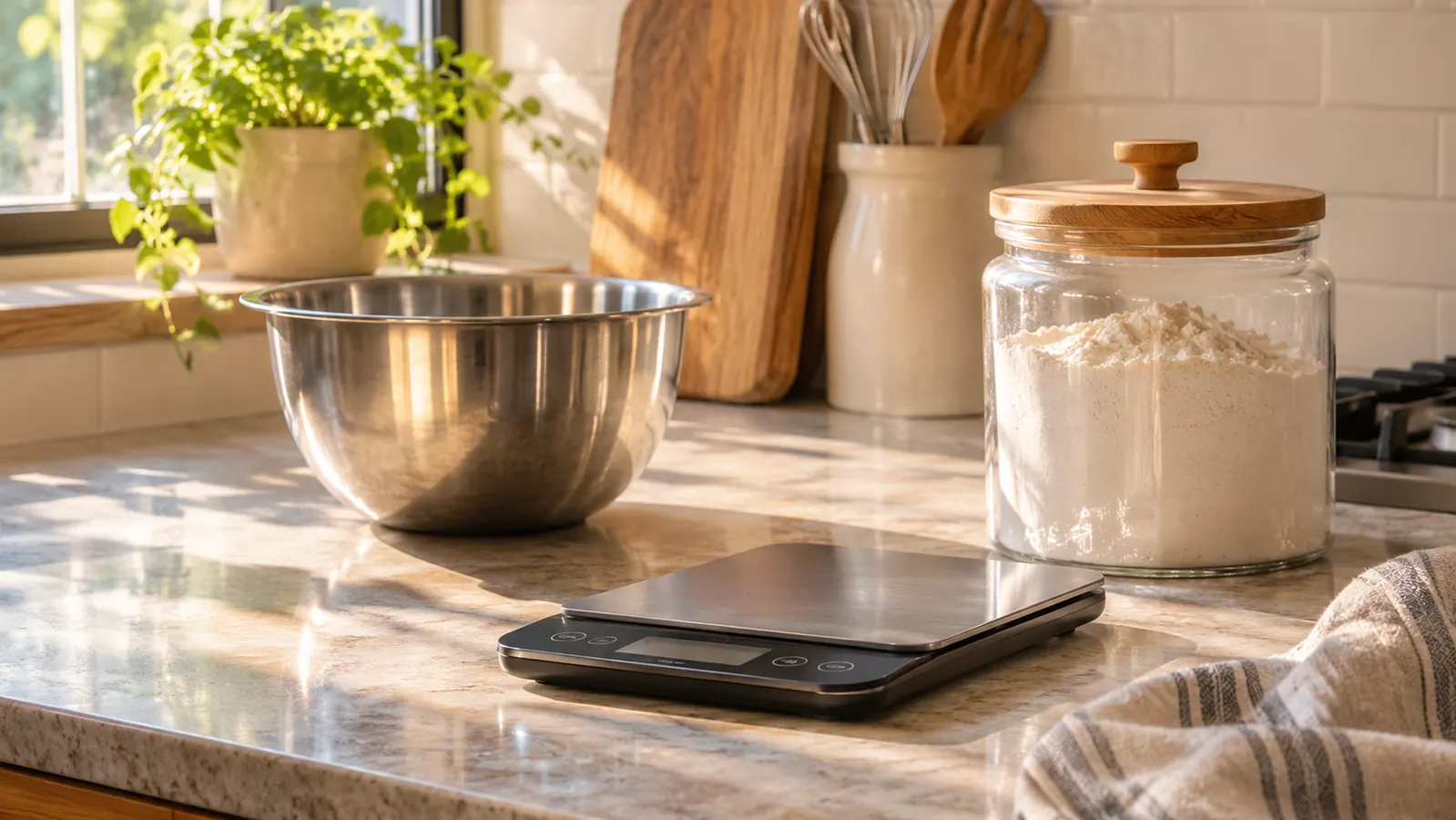
I have used the Escali Primo almost every weekend for about two years. It sits on the small stretch of counter between my mixing bowls and the stove, which means it also gets flour dusted over it, butter splattered near it, and the occasional drip of vanilla extract. I do not treat it gently. It has been knocked against the backsplash, buried under a bag of sugar, and once left out overnight in a dusty corner. It still turns on and still weighs accurately.
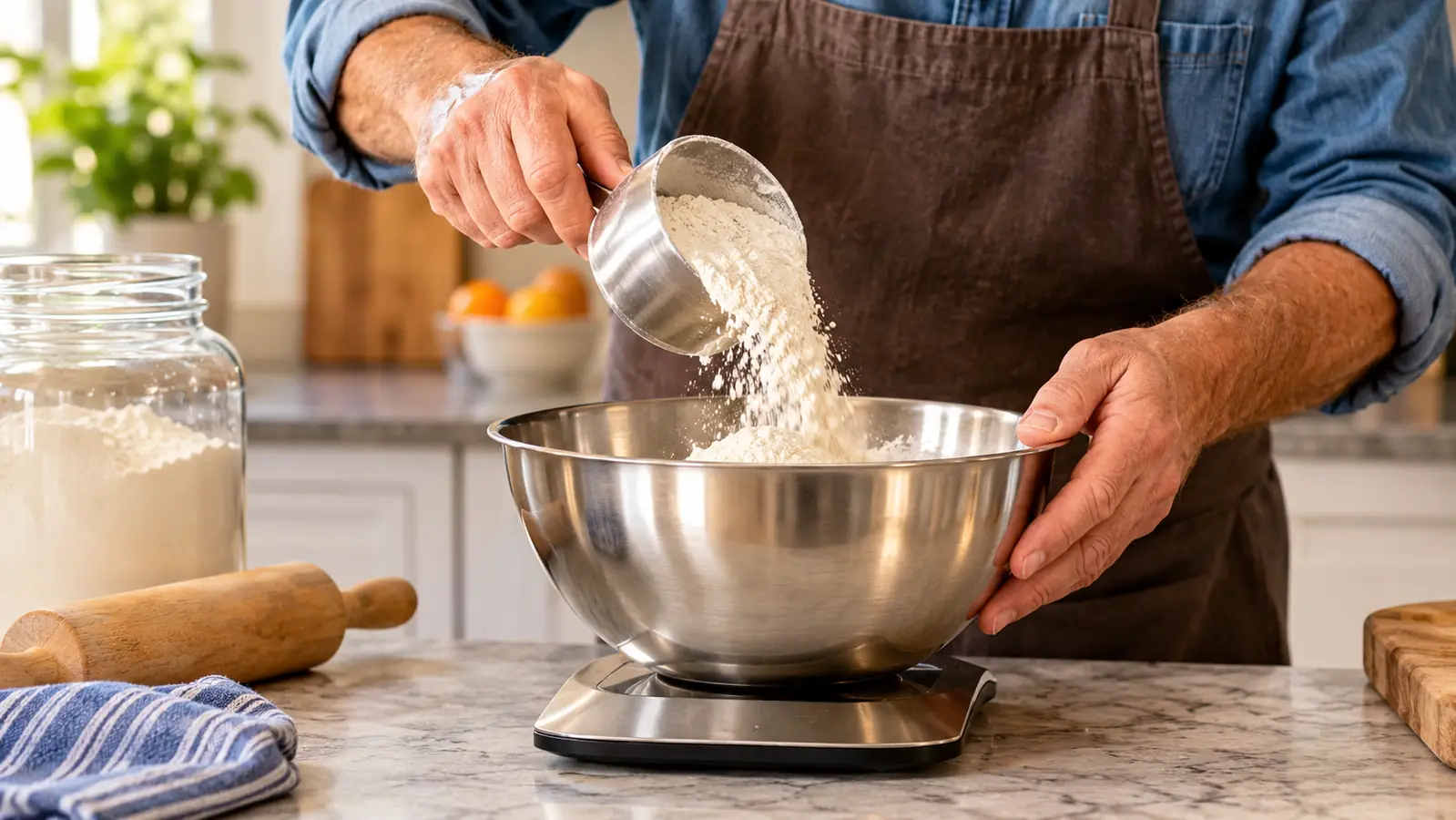
My routine is simple. I put my mixing bowl on the scale, press the tare button to zero it out, and add flour until the display reads the gram weight I want. Then I tare again for the sugar, again for the cocoa, and again for the chocolate chips. For a big batch of cookies I can measure every dry ingredient into the same bowl without ever washing a measuring cup in between. That alone saves me about ten minutes of dishes on a baking day, and it means the brown sugar does not get packed differently halfway through the recipe.
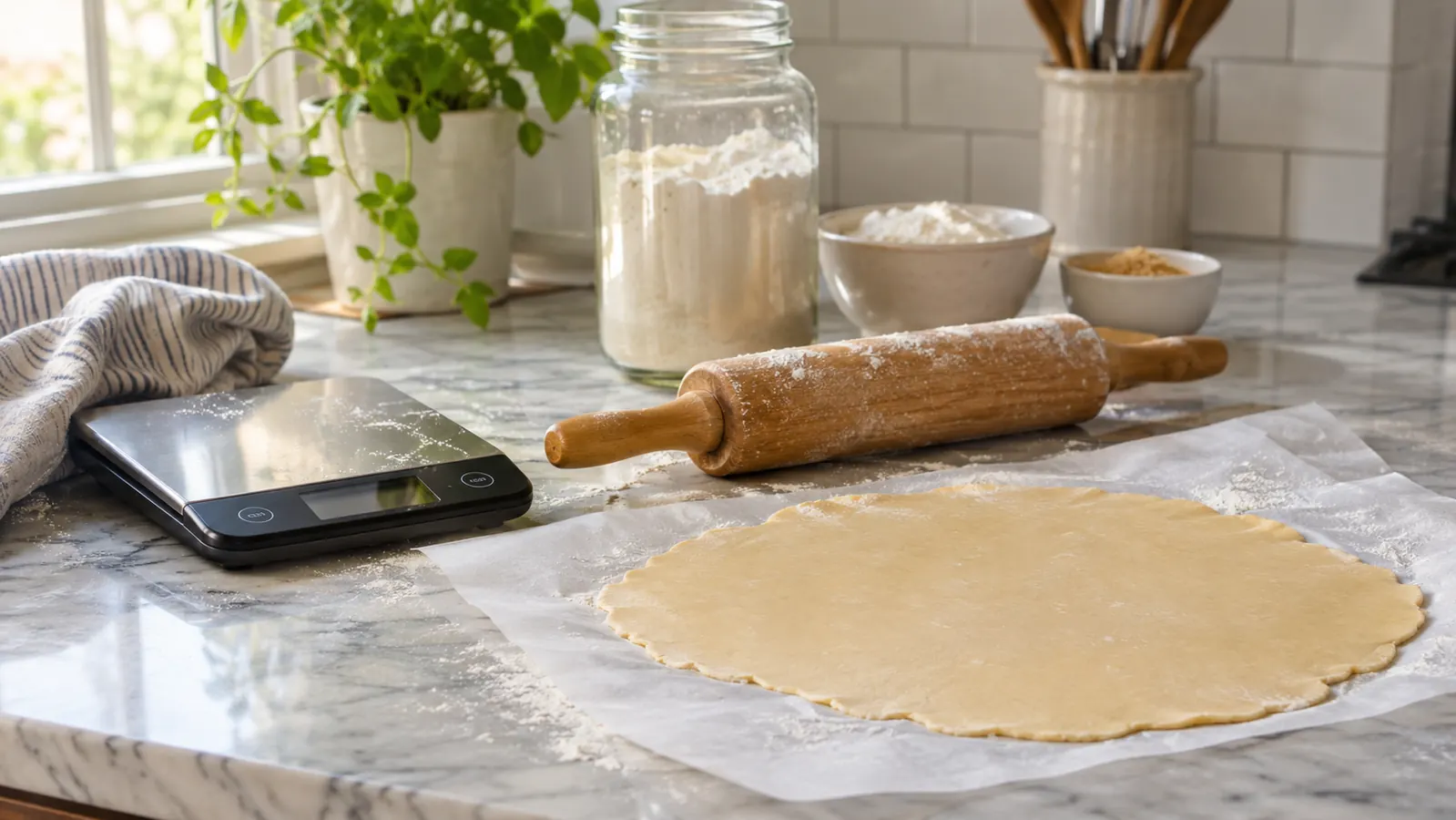
I also use it for things my mother would have thought were silly. I weigh my pie dough before I divide it so both crusts come out even. I weigh the portions of cookie dough so the bake sale trays look uniform. I weigh the flour for my bread starter, and I weigh the chocolate for my grandkids' favorite brownies. The scale does not care what I put on it. It just tells me the truth.
Why a Scale Fixed My Baking More Than Any Recipe
Here is what I learned the hard way: recipes are written in weights for a reason. When a cookbook says one cup of flour, it means a specific weight, usually about 120 grams. But a cup of flour measured by scooping can be 140 or 150 grams, and a cup measured by spooning can be 110. That difference changes the structure of a cookie, the crumb of a cake, and the flakiness of a pie crust. My problem was never that I was a bad baker. My problem was that I was measuring flour with a tool that lied to me.
The Escali Primo reads to the nearest gram and has a capacity of 11 pounds, which is more than enough for any recipe I make at home. Even my biggest batch of Christmas cookies, which fills a full half sheet pan, stays well under that. The display is a simple LCD that is easy to read even when I am wearing my reading glasses and the kitchen light is dim. The control panel is sealed, which matters to me because I have ruined more than one kitchen gadget by getting flour and water into the buttons.
The two-button operation is the part I appreciate most. There is no menu to scroll through, no mode I have to remember, no instruction booklet I have to keep. One button turns it on and off, the other tares the weight. My husband Ray, who does not bake and generally avoids anything with more than one setting, can use it without asking me for help. That is the highest compliment I can pay a kitchen tool.
The Tare Button Is the Feature I Use Most
If you have never used a digital scale, the tare function is the button that makes everything easy. You put your bowl on the scale, press tare, and the display goes back to zero. Then you add your first ingredient, note the weight, press tare again, and add the next. It means you can measure flour, sugar, salt, and baking soda all into the same bowl, in order, without dirtying a single extra dish. For someone with a small kitchen and one sink, that is a genuine quality-of-life improvement.
I use the tare button dozens of times on a baking day. I tare the bowl, tare the plate, tare the little ramekin I keep butter in. It is the reason I reach for the Primo instead of my old measuring cups. The scale does not care whether I am weighing flour, chocolate chips, or the envelope I need to mail out. It just zeros out and lets me start fresh.
The auto shut-off is also a small mercy. I have left the scale on more times than I can count, and it turns itself off after a while instead of draining the battery. I cannot tell you exactly how long it waits, because I have never stood there timing it. I just know that when I come back to the kitchen an hour later, the display is off and the scale is ready for the next time I need it.
How It Held Up Over Two Years of Weekend Baking
I have owned the Escali Primo for about two years now. It has weighed hundreds of batches of cookies, dozens of pies, countless loaves of bread, and a truly embarrassing amount of chocolate chips. It has been dropped, knocked, dusted with flour, and wiped down with a damp cloth more times than I can count. It still works like it did on day one.
The item weight is listed at 431 grams, which makes it light enough to move around but heavy enough to stay put when I am scooping flour into a bowl. It is 8.5 by 6 by 1.5 inches, which means it fits in my utensil drawer when I need the counter space for a big bake. The plastic body has held up fine. I was a little worried it would feel cheap, but it does not. It feels like a tool that was designed to be used every day, not a gadget that sits in a box.
The one thing I will say honestly is that the scale is not magical. It will not fix a recipe that is badly written, and it will not fix an oven that runs hot. I still use my Taylor oven thermometer because my oven runs about 15 degrees hot, and the scale cannot help with that. What the scale does is remove the biggest variable in my baking: the flour. Everything else I can adjust once I know the flour is honest.
The scale does not care whether I am weighing flour, chocolate chips, or the envelope I need to mail out. It just zeros out and lets me start fresh.
What Changed in My Baking
The biggest change is that my cookies are the same size now. Not close to the same size, the same size. When I weigh the dough into portions of 40 grams each, every cookie bakes for the same amount of time and comes out the same thickness. That matters more than you would think when you are putting together a tray for the parish bake sale. Uniform cookies look professional, and they sell out faster.
The second change is that I trust recipes more. When a baking blog says a dough should be a certain weight, I can check it. When a recipe says to add flour until the dough reaches a certain consistency, I can weigh what I actually used and write it down for next time. I have a little notebook now with the gram weights of all my regular recipes, and I do not have to guess anymore.
The third change is harder to explain. Baking feels calmer now. I am not holding my breath when I slide a tray into the oven, wondering whether this batch will be the one that finally works. I know the dough is right because I weighed it. The oven is still a little hot, but I know that too, and I set the temperature accordingly. The scale took the guesswork out of the part that was never supposed to be guesswork.
What I'd Tell a Friend at My Kitchen Table
If you came over and asked me whether you need a scale, I would not give you a long speech. I would hand you the Escali Primo and ask you to weigh a cup of flour the way you normally do. Then I would ask you to spoon it in lightly and weigh it again. The difference on the display would convince you faster than anything I could say. That is the whole argument for baking by weight, and it takes about thirty seconds to see it.
I would also tell you not to overthink which scale to buy. The Escali Primo is not fancy. It does not have a touchscreen or a USB port or a companion app. It has two buttons, a tare function, and a sealed panel that keeps flour out of the works. For home baking, that is everything you need and nothing you do not. I have used mine for two years and I have never once wished it did more.
What I Liked
- Weighs to the nearest gram, so your flour is always the same
- Two-button operation, nothing to learn or forget
- Sealed control panel keeps flour and water out of the buttons
- Tare button lets you measure every ingredient into one bowl
- Small enough to live in a drawer, light enough to move around
Where It Falls Short
- No app or Bluetooth, so it will not sync to your phone
- Plastic body feels simple, not fancy
- Auto shut-off timing is not adjustable
- Capacity tops out at 11 pounds, which is fine for home baking but not for bulk canning batches
Who This Is For
The Escali Primo is for the baker who has made the same recipe three times and gotten three different results. It is for the person who is tired of washing a measuring cup for every single ingredient, and for the person who wants their bake sale cookies to look like they came from the same batch. It is for the home baker with a small kitchen who needs a scale that can live in a drawer and come out on weekends. It is also for the person who is just starting to bake by weight and wants something simple, because the two-button operation means there is nothing to learn.
If you bake even once a week, I think the Escali Primo will earn its place on your counter quickly. It is the kind of tool that does not seem exciting until you use it, and then you cannot imagine baking without it. My daughter has one too, and she uses it for the same reason I do: her cookies come out the same size every time now.
Who Should Skip It
If you only bake from box mixes and never measure flour by the cup, you probably do not need a scale. If you are looking for a scale that can do nutrition tracking, bluetooth, or app connectivity, this is not the one. The Escali Primo is a simple counter scale that weighs things. It does not have a lot of extra features, and it is not trying to be a smart gadget. If you want something that connects to your phone, you should look elsewhere.
I would also say that if you are not willing to convert your recipes to grams, the scale will not do you much good. Weighing in ounces works, but the real magic happens when you start using gram weights from baking blogs and cookbooks. That takes a little getting used to. Once you do it, though, you will not want to go back.
Make this weekend's batch the same as last weekend's
The Escali Primo has been on my counter for two years and I still reach for it every Saturday. If your baking is inconsistent, this is the simplest fix I know. It weighs to the gram, the buttons are sealed, and it fits in a drawer. No apps, no menus, no learning curve.
Amazon Check Today's Price on Amazon →