
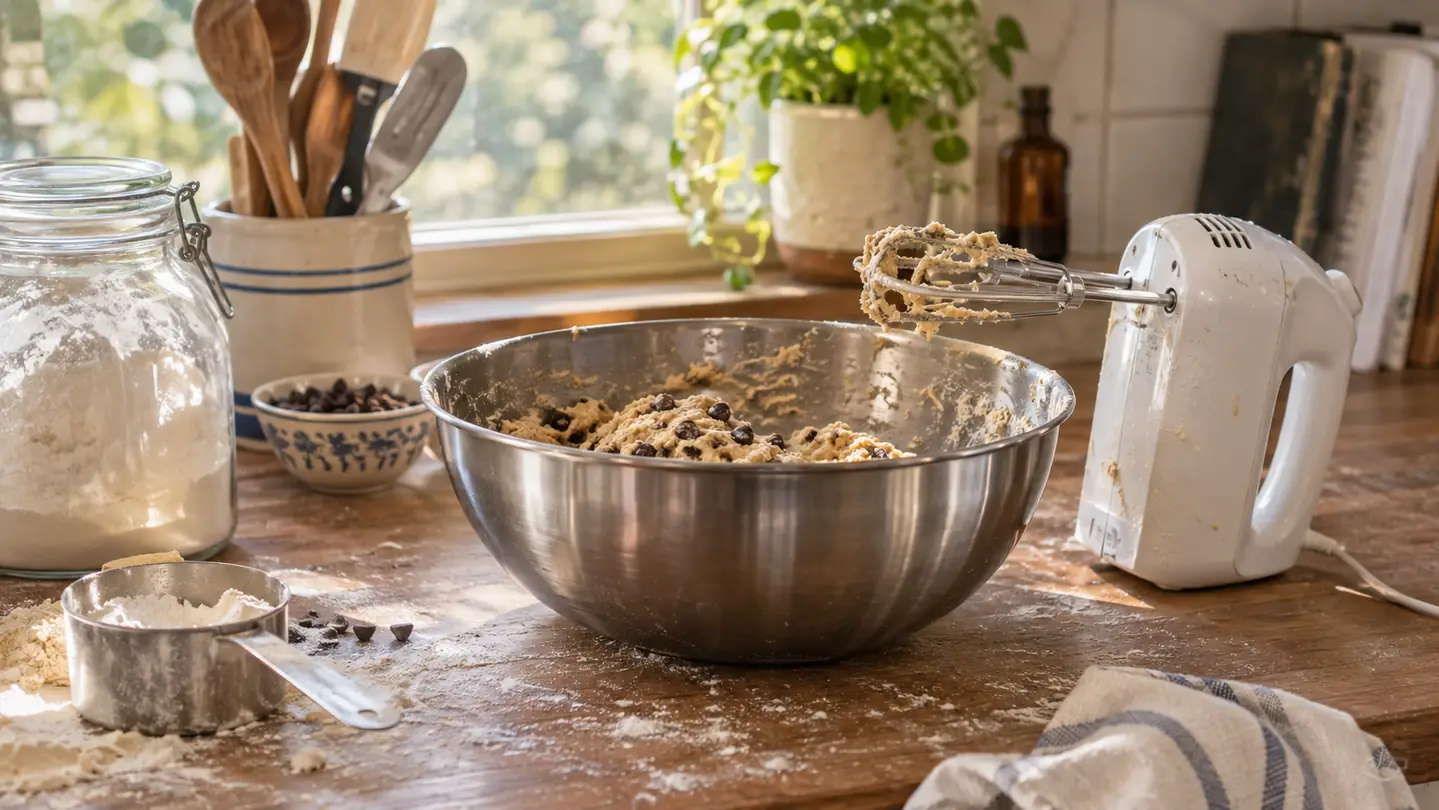
By the second week of November, my kitchen counter disappears under butter, flour, and three kinds of chocolate chips. Every year I tell myself I will pace the holiday baking better. Every year the parish bake sale lands on the same weekend as Ray's office party, and I end up making four batches of cookies in one afternoon. This is my second holiday run with the KitchenAid 5 Ultra Power Speed Hand Mixer, and for the second year in a row my wrist did not ache by the end of the day.
The mixer is small, about eight inches long and two pounds, so it lives in a drawer instead of taking up counter space. That matters in my kitchen, which has about three feet of usable counter on a good day. I have used it nearly every weekend since I bought it in September of last year, plus a full holiday run, and I have some practical notes for anyone thinking about buying one. I am not going to tell you it will change your baking. I am going to tell you what it did in my kitchen, batch after batch, and where it fell short. The short version is that I would buy it again. The long version is below, and it includes the things that annoyed me, because every honest review should.
The Quick Verdict
A light, simple hand mixer that handles the everyday jobs well and stays out of the way. It will not knead bread dough or whip a dozen egg whites in thirty seconds, but for cookies, cakes, frostings, and mashed potatoes it is hard to beat at this size.
Amazon Check Today's Price →A hand mixer that keeps up with a full holiday bake.
The KitchenAid 5 Ultra Power Speed Hand Mixer gives you five speeds, a lockable swivel cord, and beaters that release with one hand. It has handled every batch I have thrown at it in more than a year.
Amazon Check Today's Price on Amazon →How I've Used It
I did not set out to review this mixer. My first holiday season with it, I set out to get through the whole run. The first test was my standard sugar cookie dough, which is stiff enough that my old mixer used to walk across the counter. The KitchenAid handled it, though I did finish the last of the flour by hand. Then came chocolate chip cookies, cream cheese frosting for the bake sale, whipped cream for the pies, and a big pot of mashed potatoes for Sunday dinner when the kids came over. The mixer came out of the box ready to go, no assembly beyond pushing the beaters in until they clicked.
The pattern that emerged is simple. Speed one folds in nuts and chocolate chips without smashing them. Speeds two and three do most of the everyday mixing. Speed five whips cream quickly, and it is the speed I use for the topping on Ray's favorite pie. I keep coming back to the push buttons, which took me a day to get used to after years of a dial, but now I prefer them. They are easy to press even with a floured hand, and there is no dial to collect batter.
I also used it for two boxed cake mixes in a pinch, a batch of brownies, and a double batch of my grandmother's pound cake. That pound cake batter is heavy, and the mixer slowed down toward the end. I finished it by hand, which is what I would do with any hand mixer. The point is that nothing burned out, nothing wobbled, and nothing splattered across the kitchen.
The bake sale was the real test. I made four dozen sugar cookies, two dozen chocolate chip, and a double batch of the cream cheese frosting that everyone asks me about. The mixer ran for most of the afternoon with short breaks, and it never got hot, never made that burning smell my old mixer made, and never left a streak of unmixed butter in the bowl. That is the kind of reliability I care about at my age.
Five Speeds and Push Button Controls
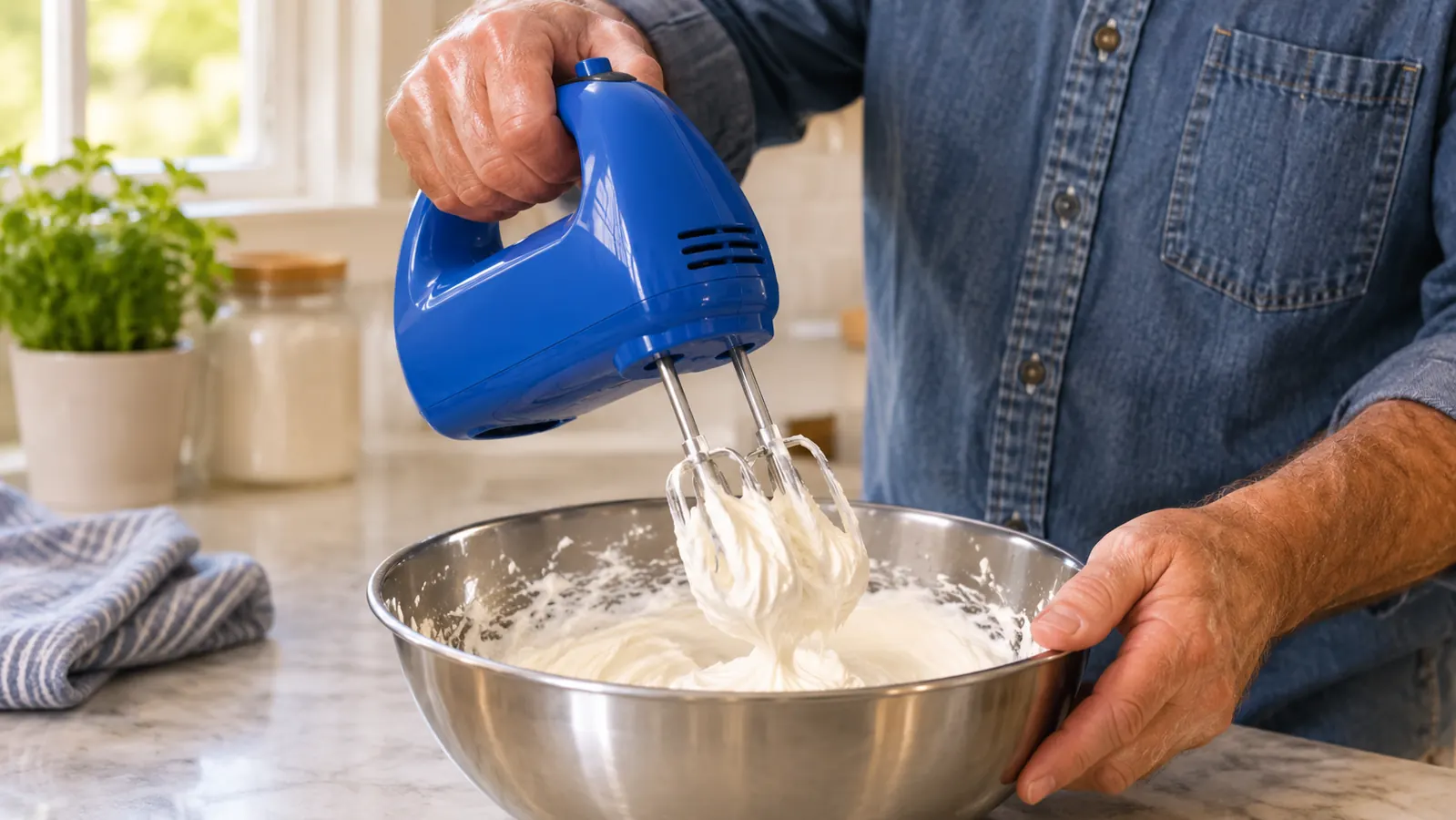
The five speeds are spaced well. On many mixers, the low speeds are too fast and the high speeds are too slow. Here, speed one is genuinely slow, which matters when you are folding in chocolate chips or nuts. The listing describes it exactly as I found it: speed one for mixing in nuts and chocolate chips, speed five for whipping cream. I would add that speeds two and three are where I live most weekends. I tested this on purpose, because the difference between speed one and speed two is where most hand mixers fail.
The push buttons sit on top of the handle, and the layout is simple enough to use without looking at it. I have pressed them with a floured thumb, a buttery thumb, and once with the edge of my wrist when my hands were covered in dough. All three worked. The buttons also mean there is no dial to gum up with batter, which is the part of my old mixer that always got sticky.
One note on technique. The mixer is light enough that you can hold it at an angle and let the beaters do the work. I do most of my mixing in a deep stainless bowl, and I have not had a single incident of batter climbing up the beaters, which is more than I can say for the mixer I used before.
The speed buttons are also easy to clean around. Batter does not collect in the gaps the way it did around the dial on my old mixer. A damp cloth wipes the top clean in seconds. It is a small thing, but after thirty years of baking, I have learned that the small things are what make a tool worth keeping.
The Lockable Swivel Cord and Detachable Spindle
The lockable swivel cord sounds like a small thing until you have fought a cord that twists and dips into the bowl. This cord swivels and locks where you put it. I tuck it to the right when I am mixing and it stays there. When I set the mixer down, the cord rests against the counter instead of dangling into whatever is below.
The detachable spindle is the feature I was most skeptical about, and it has turned out to be the one I use most. The spindle detaches so the area around the beaters can be rinsed properly. With my old mixer, that space collected dried batter no matter how carefully I washed it. Here, I pop the spindle off, rinse it, and put it back. It takes about ten seconds.
The beaters themselves release with one hand. There is a button on the mixer, and a single press drops both beaters into the sink. I use my thumb, and I do not have to brace the mixer against my hip the way I did with the old one. For anyone with hand pain, this is the difference between washing the beaters and leaving them in the sink until tomorrow.
Cleaning the whole thing takes less time than cleaning a mixing bowl. The beaters rinse clean under hot water, the spindle comes off and rinses under the tap, and the body wipes down with a damp cloth. I have never owned a hand mixer that was this easy to keep clean, and that matters when you bake as often as I do.
Weight, Balance, and a Small Kitchen
At two pounds, this is the lightest hand mixer I have used in years. That matters when you are holding it over a pot of hot mashed potatoes or whipping cream for a full minute. My old mixer felt like a brick by the end of a baking day. This one does not. I can hand it to Ray for the mashed potatoes and he does not complain, which is the highest praise he gives any kitchen tool. I timed it once: about three minutes for a quart of cream. That is fast enough for me.
It is also small. The dimensions are eight inches deep, three and a half inches wide, and six inches tall, and it fits in the drawer beside my rolling pin. In a kitchen with limited counter space, that is the whole argument. I do not have to find a permanent home for it on the counter. It lives in the drawer, and it comes out when I need it.
The balance is good for a mixer this size. The handle sits naturally in my hand, and I do not feel like I am supporting the weight at the far end. I have mixed a double batch of frosting without my wrist complaining, and I am at an age where I notice these things.
I will also say that the mixer rests on its heel neatly between batches. I set it down on the counter with the beaters hanging over the bowl, and it stays put. It does not tip, it does not slide, and it does not leave a mess. For someone who bakes in a small kitchen, that stability is worth more than any feature on the box.
What It Will Not Do
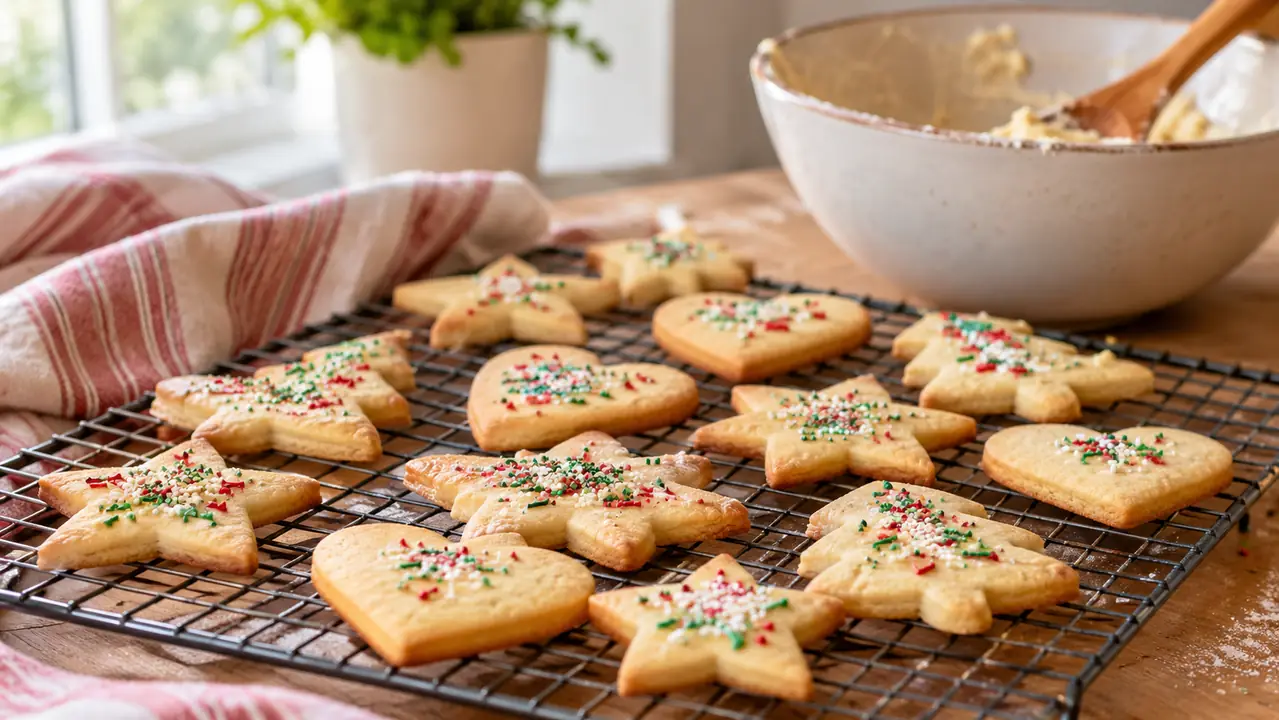
I want to be honest about the limits. This is a 60-watt mixer, and it is not built for heavy doughs. I would not use it for bread dough or a stiff roll dough. It does not come with dough hooks, only the two Turbo Beaters, so kneading is not on the table. For my sugar cookie dough, which is about as stiff as anything I make, the mixer manages but slows down, and I finish the last bit by hand. That is not a complaint, just the nature of a light mixer.
It is also not a stand mixer. If you bake in large batches, or if you want to walk away while something mixes, this is not the tool for you. The one-year limited warranty is shorter than I would like, and the plastic body is not as substantial as the metal mixers from years ago. None of that changes my recommendation, but you should know it before you buy.
The other limit is the included accessories. You get the two stainless steel Turbo Beaters and nothing else. No whisk, no dough hooks. For my baking, the two beaters cover everything I need. If you specifically want a whisk attachment, this is not the mixer for you, and I would not want you to buy it expecting one.
What I Liked
- Light at two pounds, easy on the wrist through a long baking day
- Five speeds from gentle folding to whipping cream
- Beaters release with one hand; the spindle detaches for cleaning
- Lockable swivel cord stays out of the bowl
- Small enough to live in a drawer, not on the counter
Where It Falls Short
- 60-watt motor strains on stiff cookie doughs
- Only the two Turbo Beaters are included, no whisk or dough hooks
- One-year limited warranty is short
- Push buttons take a day to get used to if you have always used a dial
Four batches of cookies, two pies, a bowl of frosting, and a pot of mashed potatoes in one weekend, and my wrist was still fine on Monday morning.
Who This Is For
This mixer is for the home baker who bakes every weekend and wants one tool that covers the basics. It is for cookies, cakes, frostings, whipped cream, and mashed potatoes. It is for small kitchens where counter space is precious and for anyone who does not want to haul a stand mixer out of the cupboard for a single batch of brownies. If that sounds like your kitchen, this mixer will earn its place in your drawer.
I would also recommend it to someone who is buying their first hand mixer or replacing one from decades ago. The controls are simple, the cleaning is easy, and nothing about it requires a learning curve beyond one batch. My daughter-in-law borrowed it for a cake last month and ordered her own the next week.
It is also a good choice if you bake for a crowd a few times a year but not every day. The holiday season is exactly the kind of workload this mixer handles well. It is not the fanciest tool in the drawer, but it is the one I reach for first, and that is the test that matters.
Who Should Skip It
Skip this mixer if you bake bread or heavy doughs regularly. A 60-watt hand mixer with two beaters is not the tool for that job, and you will be frustrated. Skip it if you want a whisk attachment or dough hooks, because they are not in the box. And skip it if you bake in serious volume, where a stand mixer will save you time and your arms.
I would also say skip it if you are hoping a new mixer will fix a recipe that is not working. No mixer will save a dry cookie dough or a curdled frosting. This mixer is a good tool, but it is still just a tool. It makes the work easier; it does not do the work for you.
And if you already own a hand mixer that you are happy with, you do not need this one. The KitchenAid is better than the one I replaced, but it is not magic. It is a well-made tool that does what it promises. If your current mixer does that, keep it.
The mixer I reach for every weekend.
After a full holiday season of cookies, pies, frostings, and mashed potatoes, the KitchenAid 5 Ultra Power Speed Hand Mixer is still going strong. Five speeds, a lockable swivel cord, and beaters that release with one hand.
Amazon Check Today's Price on Amazon →