
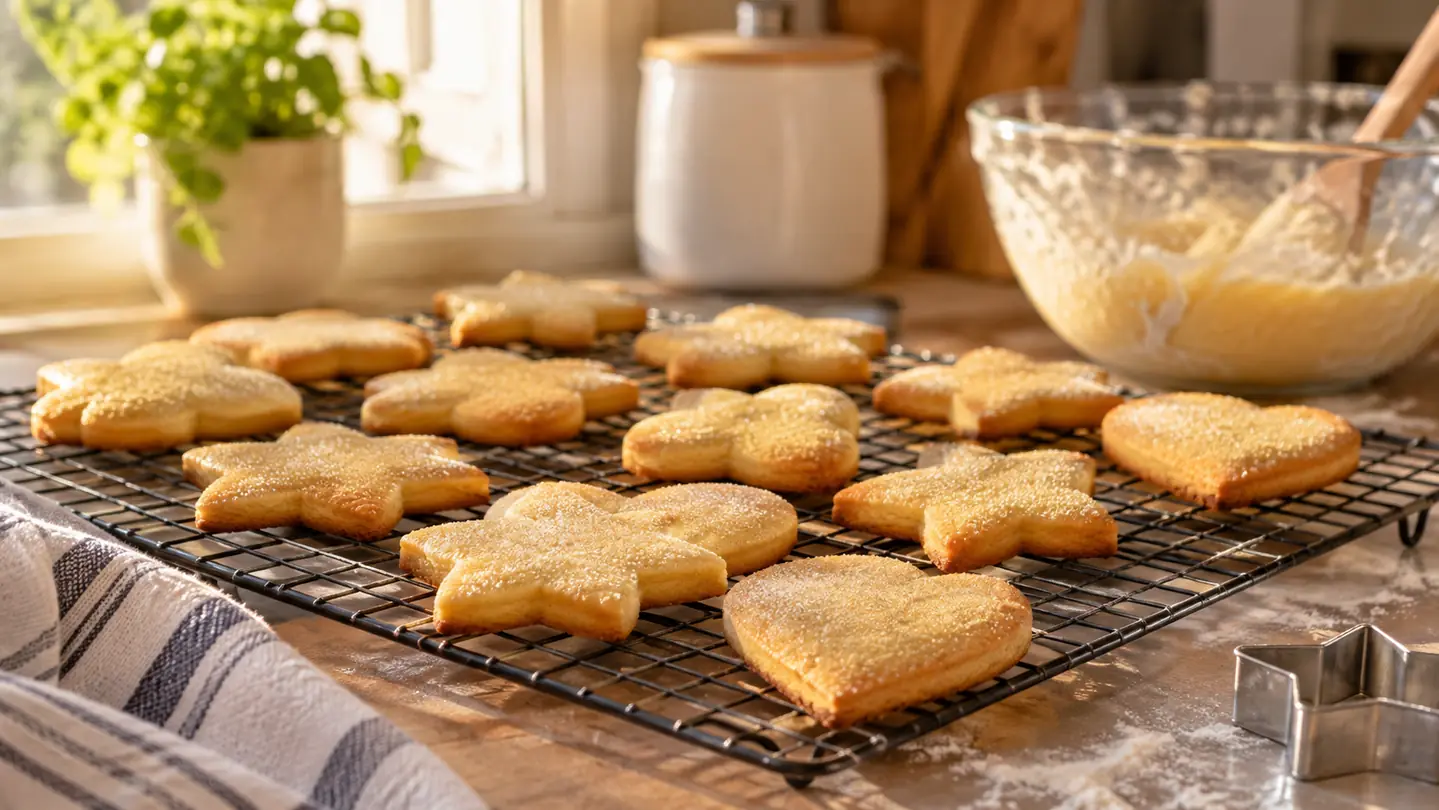
If you have ever pulled a sheet of cookies out of the oven and stood there wondering where to put them, this review is for you. I spent years cooling cookies on a clean dish towel, flipping them halfway through, and hoping the bottoms would not turn soft. Then I bought a set of Checkered Chef cooling racks. Two years later, they are still the first thing I reach for on a baking weekend. This is the honest review I wish I had read before I bought them, the one that talks about fit, rust, and cleanup instead of just telling you the racks are great.
Here is the truth about cooling racks: most of them are fine. They hold cookies. They cool cakes. You forget they exist until the moment you need them. So when I say these racks have earned a permanent place in my small kitchen, I mean something specific. They fit my pans. They have not rusted. And after two years of heavy use, both racks are still perfectly flat. That last part matters more than you would think, because a warped rack is worse than no rack at all.
The Quick Verdict
Two years in, both racks are still flat, still stainless, and still earning their place on my counter. Buy the size that fits your pans, dry them before you put them away, and they will outlast your oven.
Amazon Check Today's Price →The racks I reach for every baking weekend
Checkered Chef cooling racks have held up through two years of weekend baking, a full holiday run, and more parish bake sale cookies than I can count. If your cookies are still cooling on a towel, this is the fix.
Amazon Check Today's Price on Amazon →How I've Used These Racks
I am Marlene, and I have been baking at home for about thirty years. I bake most weekends, and every November and December I do a big run of cookies and pies for my family and for the parish bake sale. My kitchen is small, with limited counter space, and my oven is a standard electric one that runs about fifteen degrees hot. I found that out with a Taylor oven thermometer, after a batch of cookie bottoms burned while the tops looked fine.
I have owned two Checkered Chef cooling racks for about two years. They fit inside my Nordic Ware half sheet pans, which was the first thing I checked, because a cooling rack that does not fit your pans is just something taking up drawer space. I use them for cookies, sheet cakes, and the occasional pan of roasted vegetables. Two racks is exactly the right number for my kitchen: one in use, one just washed and drying.
The racks come in three sizes. The quarter size is about 8 by 11 3/4 inches and fits toaster ovens and small trays. The jelly size is about 10 by 15 inches and pairs with jelly roll pans. I bought the size that fits my half sheet pans, and it fits exactly. Knowing the sizes exist matters, because the size you choose has to match the pans you actually own, not the pans you wish you owned.
What Nobody Tells You About Fit
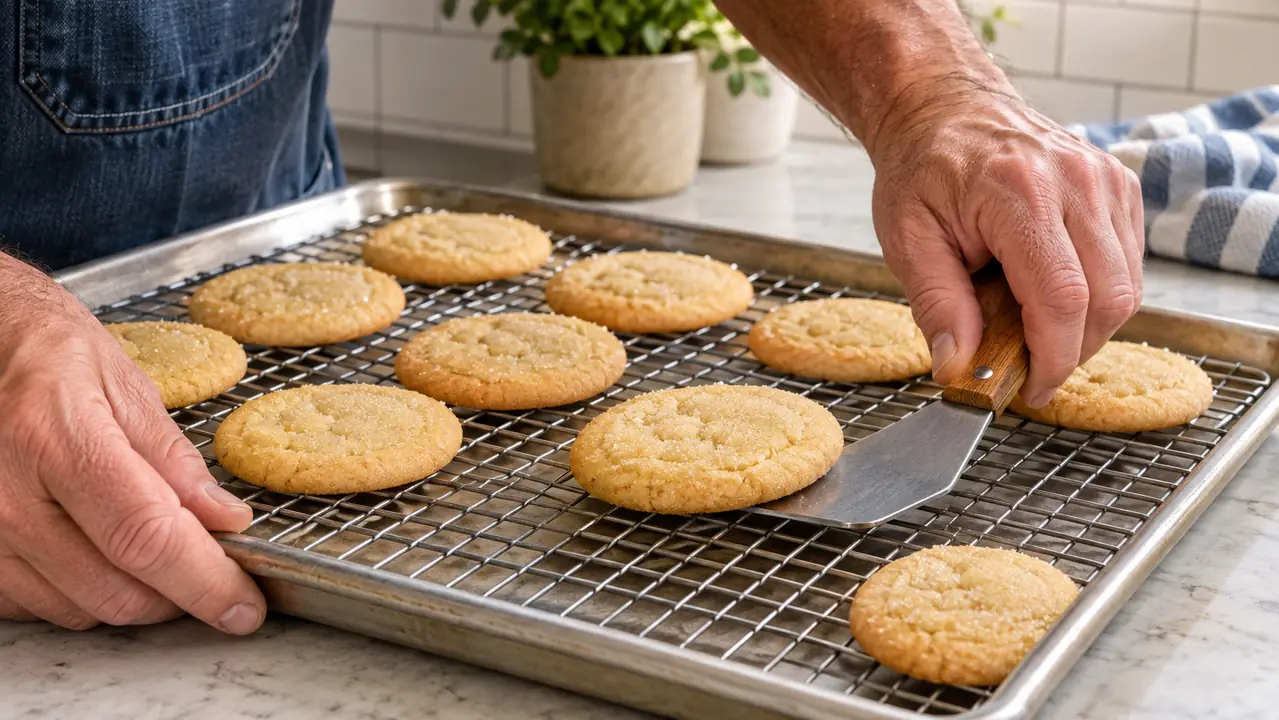
The first thing nobody tells you is that a cooling rack is smaller than the pan it sits in, and it is smaller on purpose. The Checkered Chef rack sits down inside my half sheet pan, with the pan walls a little higher than the rack. That is how it catches crumbs and drips, and it works beautifully for cookies. But if you picture the rack covering the whole pan, the first time you see it you will think you bought the wrong size. You did not.
The second thing nobody tells you is to measure your pans before you order. I knew my half sheet pans were the standard size, so I bought the rack that fits them and it fits exactly. If you have a pan that is not standard, or a toaster oven, measure the inside of it first. The quarter size is genuinely small. It is perfect for a toaster oven, but it will look lost in a half sheet pan, and a rack that is too small lets cookies hang over the edge and bend.
The third thing, and the one I did not expect, is that a rack sitting inside a pan does not get airflow around its edges, because the pan walls block it. For cookies that does not matter much. For a cake that needs to cool quickly, I move the rack out of the pan and set it somewhere the air can move, or I just give the cake more time. It is a small thing, but nobody tells you about it, and it explains why some cakes cool slower than you expect.
One more fit note: the rack sits flat in the pan, with no rocking. I set it down and it settles into place. That sounds like a small thing, but a rack that rocks or sits crooked is a rack that lets cookies slide. These racks sit square in my pans every time, and after two years of pulling them in and out, they still do.
What Nobody Tells You About Rust
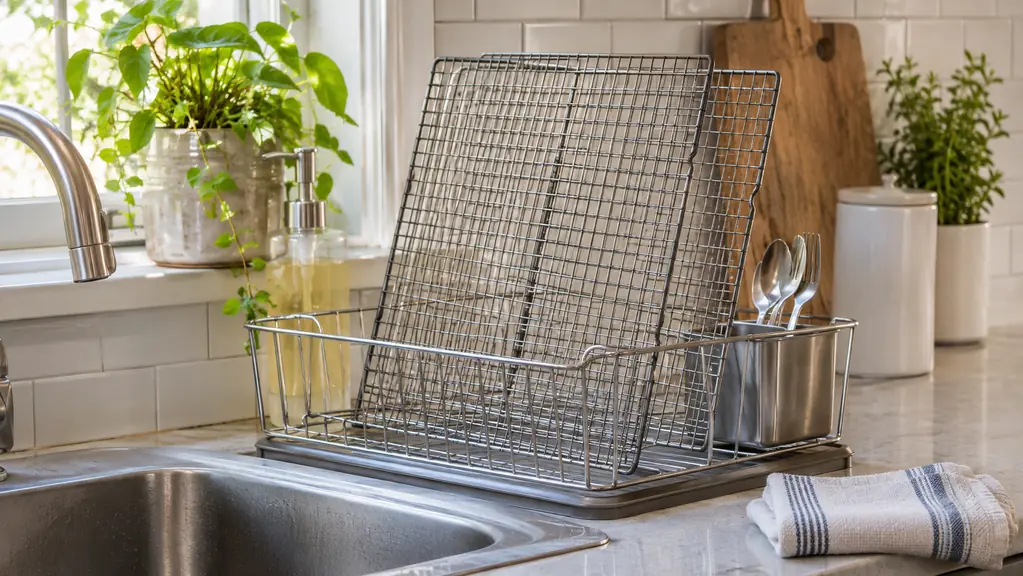
The racks are made of heavy-gauge stainless steel, and the listing says the steel resists rust and corrosion and has no toxic coatings. After two years, mine have no rust on them, and I believe that claim. But here is what nobody tells you: the little squares where the wires cross hold water. If you wash a rack and put it away wet, that water sits in the joints. In a small kitchen with no room for a big drying rack, that is a real thing to manage.
My habit is simple. I wash the racks by hand in warm soapy water, rinse them, dry them with a dish towel, and put them away. It takes about a minute. Two years of that routine, including the humid summer months, and there is not a spot of rust on either rack. Drying them is the difference between stainless steel that stays stainless and stainless steel that slowly develops dull spots, and it is the one piece of advice I would pass along.
I should also say that I do not put mine in the dishwasher. That is partly because they take up a lot of room in the dishwasher, and partly because I would still have to dry them afterward. Hand washing is faster, and I can dry them right away. If you prefer the dishwasher, that is your call, but I would not let them sit in there after the cycle ends.
Every few months I take a close look at the joints where the wires cross, just to be sure nothing is starting. So far there is nothing to find. The stainless steel has done what the listing promised. I mention this because the last racks I owned were not stainless, and they rusted within a year. That experience is why I checked these racks so carefully before I trusted them.
What Nobody Tells You About Cleanup
Here is the honest tradeoff, and it is the one thing I would want to know before buying. The tight crosshatch grid is what makes these racks so good at supporting small cookies without bowing. It is also the thing that catches crumbs, melted sugar, and the little bits of caramel that escape from a batch of sticky cookies. You cannot have the support without the cleanup. That is just the nature of a wire rack.
Cleanup is not hard, but it is specific. A soft brush gets most of the crumbs out of the squares. For anything sticky, I fill the sink with warm water and a little soap, lay the rack in, and let it soak for ten minutes. The melted sugar softens and rinses right out. I have never had to scrub one of these racks hard, and after two years they still look clean and new.
The one thing I would not do is let a sticky rack sit overnight. Melted sugar hardens into something that needs a much longer soak, and you will stand at the sink regretting it. Wash the rack while the memory of the cookies is still fresh, and cleanup stays a two-minute job. That advice applies to any cooling rack, but it matters more with a tight grid, because there are more little squares to clean.
The worst cleanup I have had with these racks came after a batch of honey cookies that leaked sugar everywhere. The racks looked like a lost cause. A ten minute soak in warm soapy water, a soft brush, and they looked like new. I have had racks in the past that needed steel wool and elbow grease. These have never needed either.
What Nobody Tells You About Staying Flat
The listing calls this a no-warp grid design, with a tight crosshatch pattern that supports cookies, sheet cakes, and roasted meats without bowing under heat. I have put mine through two years of weekend baking, a full November and December run, and enough cookies for a parish bake sale. Both racks are still flat. I check them the way you check an old friend, a quick look and a nod, and we move on.
What nobody tells you is that the grid is doing the work, so the way you store the rack matters. I keep mine inside my half sheet pans, where they fit, and I do not stack heavy things on top of them. A wire rack is not a shelf. Treat it like a tool, give it a little respect in the cupboard, and it will stay flat for years.
The no-warp claim is the one I was most skeptical about, because I have owned racks that bowed in the middle after a year. The difference here is the tight crosshatch pattern. The wires cross often enough that no single span has to carry the weight alone. That is the part of the design I did not appreciate until I saw it hold a full sheet cake.
Two years of weekend baking, a full holiday run, and a parish bake sale's worth of cookies later, both racks are still flat, still stainless, and still the first thing I reach for.
What These Racks Will Not Fix
Now for the part of an honest review that usually gets skipped. A cooling rack cannot fix an oven that runs hot. Mine runs about fifteen degrees hot, and no rack in the world changes that. I use a Taylor oven thermometer and adjust my baking times, and the racks do their job, which is letting air reach the food. If your cookies keep burning on the bottom, the problem is probably the oven, not the rack.
A cooling rack also cannot fix a recipe that is too soft. If your cookies spread into one giant sheet, a rack will cool them, but it will not make them crisp. And a rack will not make up for a pan that is the wrong size or a kitchen that is too warm. These racks are honest tools. They do one job, they do it well, and they leave the rest to you.
I mention this because the online reviews for almost any rack read like the rack will transform your baking. It will not. What it will do is cool your cookies without soggy bottoms, keep your sheet cakes from sweating, and give you a place to put a hot pan that is not the stovetop. That is the whole job, and it is worth having done right.
The other thing I will tell you honestly is that these racks will not make you a better baker. They will not fix a recipe you rushed, or a dough that was too warm, or a timer you forgot. What they do is remove one small frustration from the process, the frustration of having a hot sheet of cookies and nowhere to put them. That may sound like a small thing. After thirty years of baking, I can tell you it is not small at all.
What I Liked
- Heavy-gauge stainless steel has resisted rust through two years of heavy use
- Tight crosshatch grid supports small cookies and sheet cakes without bowing
- Fits inside my half sheet pans, so crumbs and drips are caught
- Comes as a set of two, which is exactly right for a home baker
- Three sizes, so you can match the rack to the pans you actually own
Where It Falls Short
- The tight grid catches crumbs and melted sugar, so cleanup takes a minute
- The rack is smaller than the pan, which surprises people the first time
- You have to dry it before putting it away, or water sits in the wire joints
- Measure your pans first; the quarter size is too small for a half sheet pan
Who This Is For
These racks are for the home baker who bakes in batches: cookies for the holidays, sheet cakes for Sunday dinner, a double batch of brownies for the bake sale. If you already own half sheet pans and you want a rack that fits inside them, catches the crumbs, and stays flat, this is that rack. Two years in, I have no complaints that matter.
If you are buying your first cooling rack, this is a good place to start, because you get two racks in the set and they will not need replacing in a year. If you are replacing an old rack that rusted or warped, these are the upgrade. The stainless steel and the no-warp grid are the two features that matter, and both have held up.
If you bake for a crowd the way I do, you will use these racks more than you expect. They come out for cookies, sheet cakes, a pan of roasted vegetables, anything that needs air underneath it. In my kitchen they live inside the half sheet pans, ready to go.
Who Should Skip It
If you bake a few times a year and a clean dish towel has always worked fine, you do not need these racks, and I will not try to talk you into them. If you refuse to hand wash anything, a tight wire grid will test your patience. And if your pans are an unusual size, measure them before you buy, because the rack has to fit the pan. Buy the right size and you will be happy. Buy the wrong size and no rack in the world will fix it.
I also would not buy these as a gift for someone who never bakes. A cooling rack only earns its place in a kitchen that actually uses it. For the rest of us, the ones who bake for family and bake sales and Sunday dinner, they earn their place quickly.
And one more honest note: if you already own a rack that fits your pans and has not rusted, you do not need a second set just because this one has good reviews. Buy these when you need them, the way I did.
The honest bottom line after two years
Checkered Chef cooling racks are not exciting. They are just well made, they fit my pans, and they have not rusted or warped in two years of heavy use. If you bake as much as I do, that is exactly what you want.
Amazon Check Today's Price on Amazon →