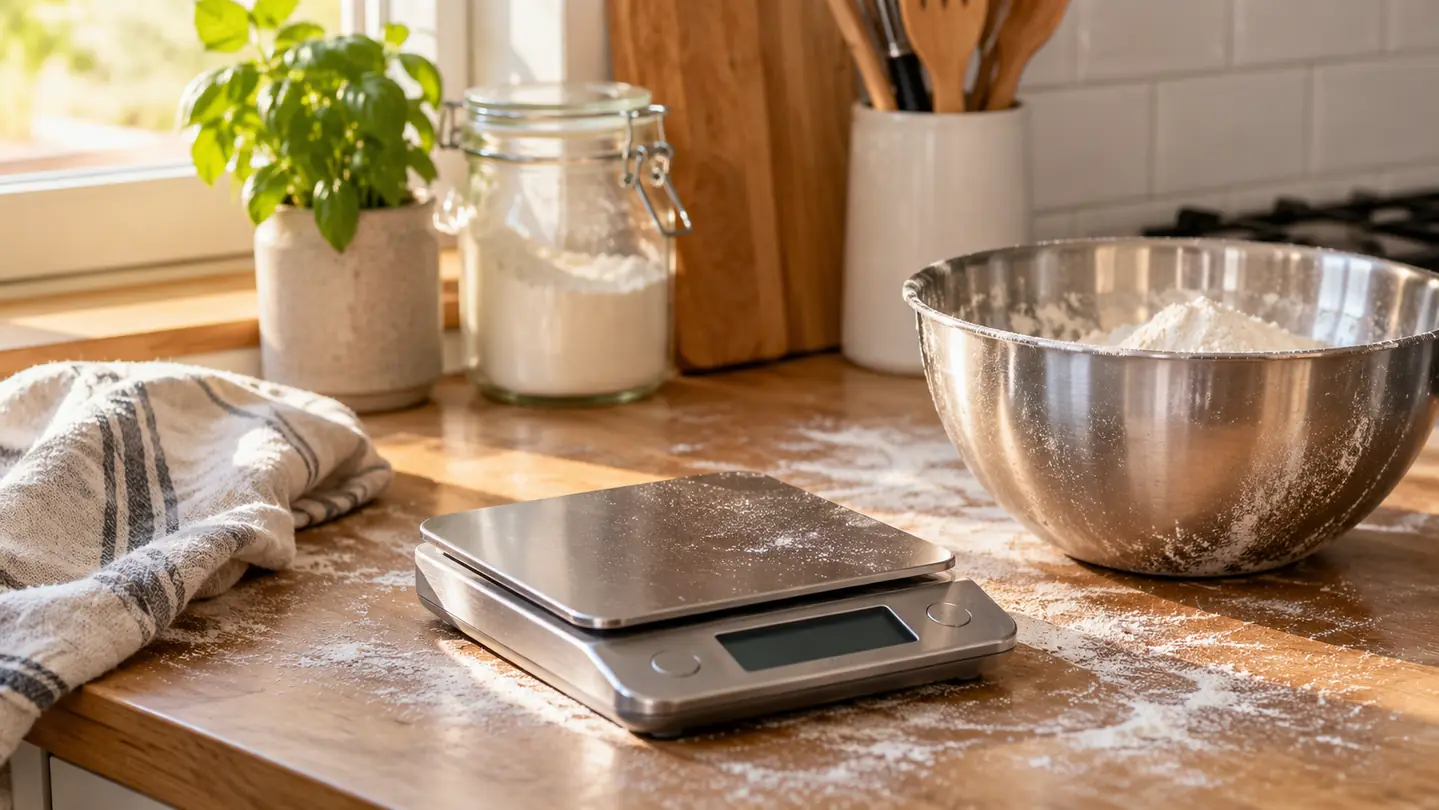
I will tell you straight out what the Escali Primo does and does not do, because that is the review I wanted before I bought mine. I am Marlene, I have baked for my family and the parish bake sale for about thirty years, and I have used the Escali Primo digital scale for about two years now. It sits on my small kitchen counter next to my one standard electric oven, the one that runs about fifteen degrees hot, and it has weighed flour, sugar, butter, chocolate, and more envelopes than I care to admit. It is a good scale. It is also not a magic scale, and the things it will not do are worth knowing before you order one.
The Quick Verdict
A dependable, easy to read scale that does the one job a baker needs done, as long as you do not expect it to do more than weigh.
Amazon Check Today's Price →The Scale I Reach For Every Weekend Batch
After two years of cookies, pies, and bake sale trays, the Escali Primo is still the scale I reach for first. If you bake by weight, this is the one to start with.
Amazon Check Today's Price on Amazon →How I Have Used It
I bought the Escali Primo about two years ago, after my daughter watched me scoop flour with a measuring cup and showed me how much more consistent baking by weight is. I bake most weekends, plus the big run of cookies and pies in November and December, so I wanted something that would hold up and something I could read without putting on my glasses. The Primo is a counter scale with a flat platform, an LCD display, and two buttons. That is the whole thing. There is no app, no Wi-Fi, no blinking light show. It weighs up to 11 pounds in 1 gram steps, and that has covered every batch I have put on it. The day it arrived, I set it next to the canisters and weighed out the flour for a batch of sugar cookies, then weighed the same cup of flour three times to see if the number held. It did, every time. That was the moment my measuring cups went into the back of the drawer for flour, and they have not come out since.
In two years, I have used it for the obvious baking jobs: flour, sugar, cocoa, chocolate for melting, butter straight from the fridge. I have also used it for portioning cookie dough so the trays come out even, for weighing packages before I mail them, and for the occasional envelope when I wanted to know exactly what the postage would be. The recommended uses on the listing say food, packages, and envelopes, and that matches my experience exactly. It is not a body scale and I have never tried to use it as one. One Saturday in October, I weighed out thirty-two balls of cookie dough for the bake sale, two trays of sixteen, and every single one came out within a gram of the others. The trays baked evenly, which had never happened before when I scooped dough by eye. That is the kind of small win that keeps a scale on my counter.
What Nobody Tells You Before You Buy It
Here is the honest part. The Escali Primo does not measure liquid in cups, it does not convert measurements for you, and it does not tell you the room temperature. It is a scale. It weighs things. That sounds obvious, but a lot of reviews make it sound like a kitchen computer. It is not. What it actually does, it does very well, and I would rather have a scale that does one job perfectly than one that tries to do six things badly.
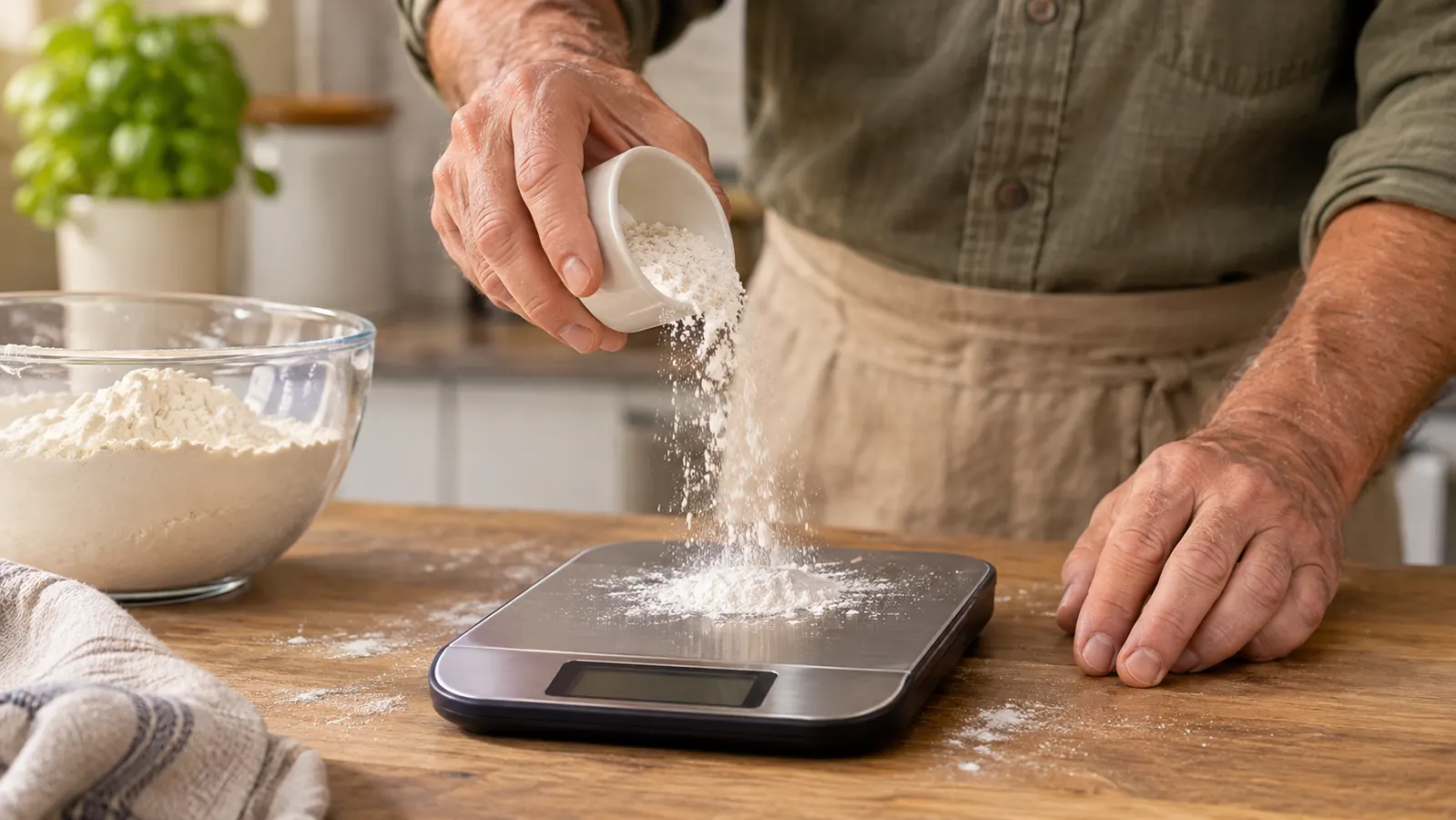
The other thing nobody tells you is that the platform is 8.5 by 6 inches, and my big mixing bowls do not always fit on it the way I want. I have learned to weigh my flour into a smaller bowl first, or to use the tare function and weigh straight into the bowl I am mixing in when it fits. The tare function is one of the two buttons, and it resets the scale to zero so you can measure multiple ingredients into the same bowl. I use that function every single time I bake. My widest mixing bowl, the one I use for bread dough, is too big to sit on the platform without hanging over the edge. The first time I tried it, the bowl tipped and I caught it with my elbow while flour went everywhere. Now I weigh the flour into a smaller bowl, pour it into the big one, and set the big bowl aside. It is an extra step, but it takes about ten seconds, and it beats sweeping flour off the floor at seven in the morning.
The sealed control panel is another detail that matters more than you would think. Flour gets everywhere. It gets under buttons, into cracks, into places you did not know existed. The Primo's panel is sealed, so I can wipe the whole thing down with a damp cloth after a messy batch and not worry about crumbs working their way inside. After two years of heavy use, the buttons still feel the same as they did on day one. I keep a damp cloth by the sink, and after a batch of cinnamon rolls or a dusting of powdered sugar, I give the whole scale a quick wipe. It takes five seconds and it looks like new. I have owned kitchen gadgets with a seam around the buttons, and I could feel them getting gritty within a year. The Primo does not have that problem.
What It Does Well
The display is the first thing I noticed. It is an LCD screen with numbers large enough to read from a normal standing height, which matters to me because I do not bake with my glasses on. The readout is accurate to 1 gram, and in two years I have never caught it giving me a number that did not match what I expected. I have tested it against the weights printed on my packages, and against the measuring cups I used to rely on, and the Primo has been the consistent one every time. Last December, during the big cookie run, I weighed a bag of chocolate chips that the package said was twelve ounces. The Primo read 340 grams, which is within a gram of what twelve ounces should be. I have also weighed the same cup of flour on different days, once in dry weather and once on a humid August morning, and the scale gave me the same number both times. The flour itself weighed differently, which is the point, but the scale never wavered.
The two button operation is genuinely simple. One button turns it on and off, the other is the tare button. That is the entire learning curve. My husband Ray, who does not bake, can use it without asking me how. My granddaughter, who is eleven, used it to weigh ingredients for a cake last spring and did not need any help. A scale that everyone in the house can use without a lesson is worth something.
The auto shut off is a small thing that saves me over and over. I get distracted. I answer the phone, I check on the oven, I go looking for the vanilla. The Primo turns itself off after a while, so I am not wasting battery or coming back to a scale that is still on. It also means I have to remember to turn it on again when I come back, which is a fair trade.
After two years of weekend baking, the Escali Primo has never once given me a number I did not trust. That is the whole review, really.
What It Does Not Do
Now the part that matters. The Escali Primo will not make your baking more consistent by itself. If you scoop flour with a measuring cup and press it down, a scale cannot fix that habit. The scale shows you the number, but you are the one who has to put the bowl on the platform, zero it, and add the flour until the display reads the weight you want. For me, that is the point. Weighing forces me to slow down and be deliberate in a way that scooping never did.
It also will not fit in a drawer easily, and I say that as someone with a small kitchen. The Primo is 8.5 by 6 by 1.5 inches, which is not huge, but it is not a slim gadget either. I keep mine on the counter between the mixer and the canisters, and that works for me. If you have even less counter space than I do, you should measure where you plan to keep it before you order.
The 431 gram weight and plastic body mean it is light enough to move around, but it is not what I would call rugged. I treat it carefully, I do not drop it, and I do not leave it in a hot oven. It is a kitchen tool, not a piece of construction equipment. I have had mine for two years and it looks and works like new, but I also do not abuse it.
How It Changed My Baking
Before the Escali Primo, I measured flour with a measuring cup the way my mother did, and my cookie batches came out a little different every time. Some Sundays the dough was soft, some Sundays it was stiff, and I blamed the weather, the flour, my oven, everything except the real problem. The real problem was that a cup of flour is not a fixed amount. It changes depending on how it settles, how humid the day is, and how firmly you scoop.
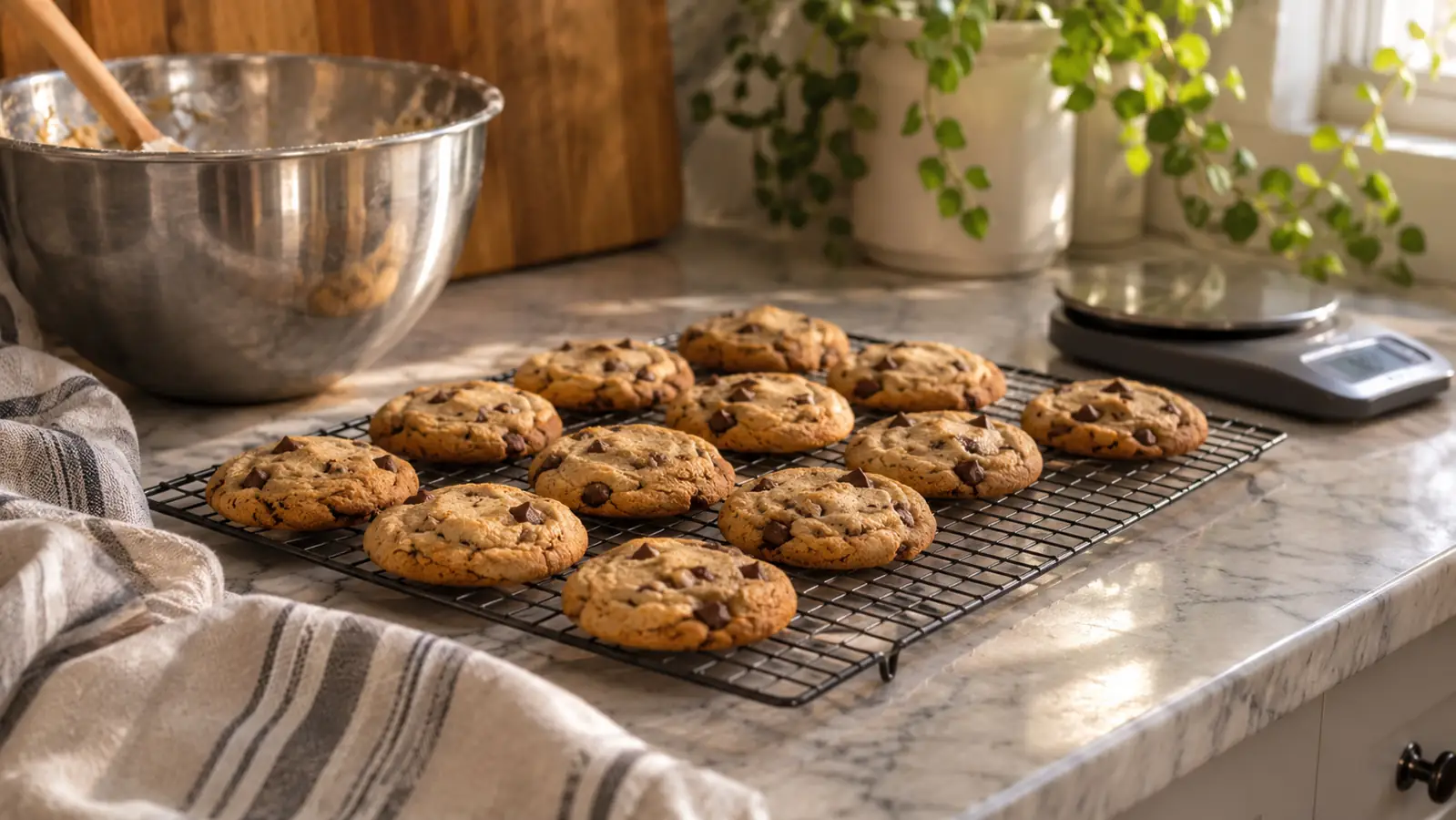
Weighing fixed that. When I weigh my flour to the same number every time, the dough comes out the same every time. My sugar cookies are consistent now in a way they never were with cups. My pie dough is more reliable. My bake sale trays look like they came from the same kitchen, because they did, and the scale is a big part of the reason why. The clearest proof came on a Sunday in March. I made two batches of the same cookie recipe, one weighed and one scooped with cups, and baked them side by side on my two half sheet pans. The weighed batch spread evenly and baked to the same golden color across every cookie. The scooped batch had thin cookies at the edges and thick ones in the middle, and the last tray came out darker than the first. I have not scooped flour since.
I want to be careful here. The scale did not make me a better baker. It made my measurements consistent, and consistent measurements made my results consistent. That is the honest version. If you are already a careful baker who measures everything the same way every time, the scale will matter less to you. If you are like I was, scooping and hoping, it will change your baking more than any other single tool you can buy.
What I Liked
- Readable LCD display, no glasses needed
- Accurate to 1 gram, consistent batch after batch
- Simple two-button operation, no manual required
- Sealed control panel wipes clean after floury batches
- Tare function makes multi-ingredient weighing easy
- Auto shut off saves the battery when I get distracted
Where It Falls Short
- Platform is small for big mixing bowls
- No cup or unit conversions, it only weighs
- Not slim enough to hide in a drawer
- 1 gram steps are too coarse for tiny amounts
- Plastic body needs gentle handling
Who This Is For
This scale is for the home baker who bakes by weight or wants to start baking by weight. It is for the person who is tired of inconsistent batches and wants to remove one variable. It is for the person who bakes for family, for holidays, for bake sales, and wants the same result every time they make a recipe. It is for the person who wants a simple, readable, dependable scale that does not require a manual.
It is also for the person who wants to portion dough evenly. I use the tare function to weigh out equal balls of cookie dough, and my trays bake evenly because every ball is the same size. That alone has made my bake sale tables look better. If you have ever had one tray of cookies come out darker than the other because the dough portions were uneven, you know exactly what I mean.
Who Should Skip It
Skip the Escali Primo if you want a scale that measures liquids in cups or does unit conversions for you. It does not do those things. Skip it if you want a scale you can hide in a drawer, because it is not that slim. Skip it if you want a scale with a big bowl included or a scale that folds up. This is a straightforward counter scale, and it is best for people who want a straightforward counter scale.
Skip it if you weigh very small amounts, like a single gram of yeast or a quarter gram of something expensive. The Primo reads in 1 gram steps, which is perfect for baking flour and sugar, but it is not a jewelry scale. For the amounts I weigh in my kitchen, it has been exactly right, and I would not trade it. But I will not pretend it is something it is not.
The Bottom Line
The Escali Primo is a good scale, and after two years of heavy weekend use, mine still works as well as the day it arrived. It is accurate to 1 gram, it is easy to read, the tare button does its job, the sealed panel makes cleanup simple, and the auto shut off saves the battery when I get distracted. It has a five year limited warranty, and the listing mentions a lifetime warranty in the features, which tells me the company expects these to last.
What it does not do is also clear. It does not convert units, it does not measure liquids in cups, it does not fit in a drawer, and it will not fix your baking habits by itself. It is a tool, and it is a very good one. If you bake by weight, or you want to start, I would buy it again. If you want a scale that does more than weigh, I would keep looking.
Two Years In, I Would Buy It Again
The Escali Primo has earned its spot on my counter. If you bake for family, for holidays, or for the bake sale, this is the scale to start with.
Amazon Check Today's Price on Amazon →