For years I baked the way my mother did. Flour sifted into a measuring cup, leveled with a knife, and if the cookies came out a little different from batch to batch, I figured that was just the nature of baking. Then a friend who taught pastry classes watched me measure flour one afternoon and said, very gently, that I was leaving a lot to chance. She handed me her digital scale and told me to weigh the next batch of pie dough. I have not gone back to cups for anything that matters.
The reason is simple. A cup of flour can weigh anywhere from 4 to 6 ounces depending on how it settled, how humid the day is, and how enthusiastically you scooped. That swing is the difference between a tender biscuit and a dry one. When you weigh your ingredients in grams, you remove the guesswork. The Escali Primo I now keep on the counter has made my baking more consistent than any new oven or mixer ever did. It reads to the gram, handles up to 11 pounds, and has a tare button that lets me measure right into the mixing bowl.
Start with a scale that reads to the gram
The Escali Primo weighs up to 11 pounds in 1-gram increments, has a tare function for measuring right into the bowl, and a sealed control panel that wipes clean after a flour dusting. It is the scale I reach for every weekend.
Amazon Check Today's Price on Amazon →Step 1: Set the scale on a flat, stable surface
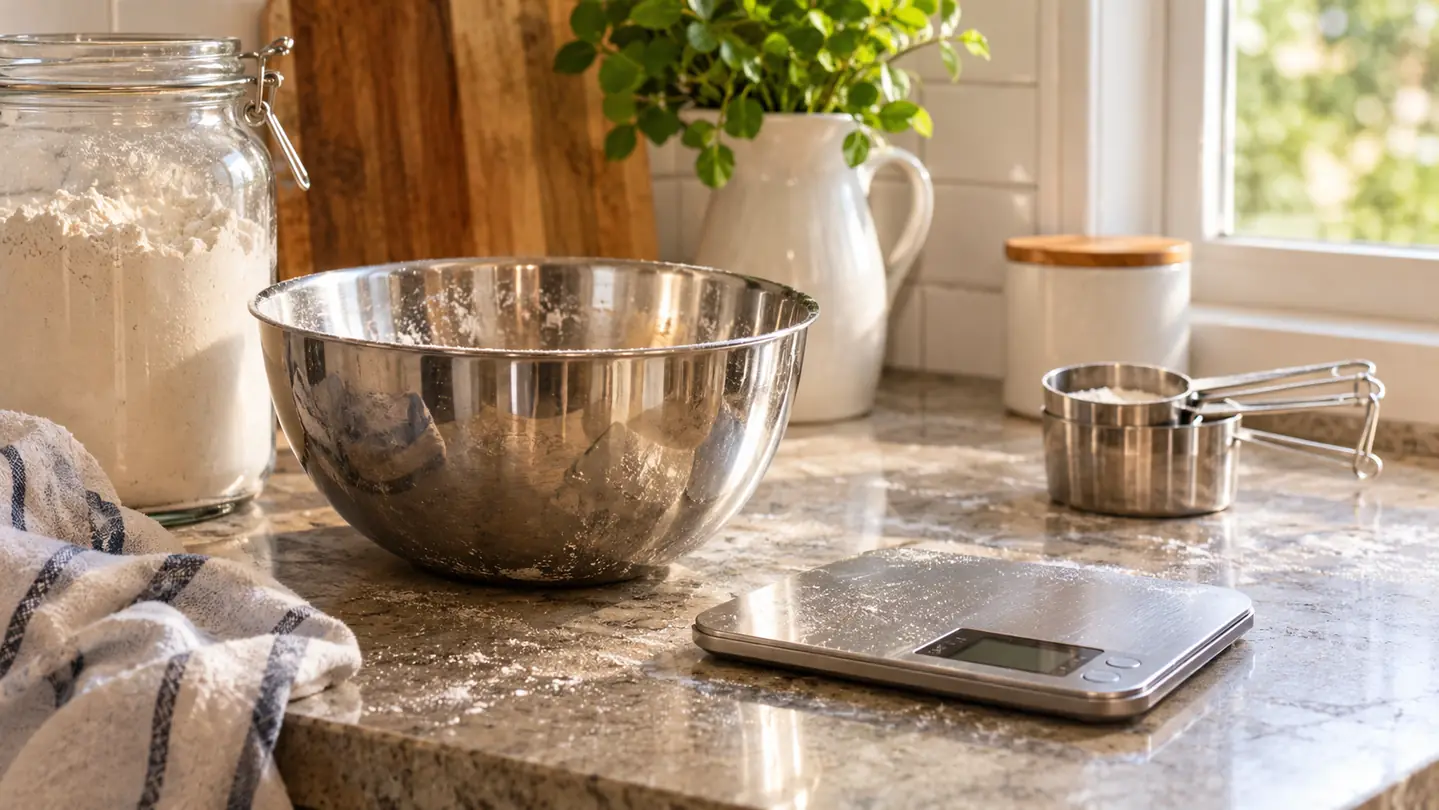
A digital scale is only as accurate as the surface it sits on. I keep mine on the counter next to the mixing bowls, never on a cutting board or a towel. A soft or uneven surface throws off the reading, and when you are measuring 5 grams of baking soda, a little wobble matters. The first time I tried weighing, I set the scale on a folded dish towel to protect the counter. The reading kept jumping between 248 and 252 grams. I thought the scale was faulty. My pastry friend pointed at the towel. I moved it to the bare counter and the number settled. That was the day I learned the surface matters as much as the scale.
The Escali Primo is compact, about 8.5 by 6 inches, so it does not take over my small counter. I leave it out between the flour canister and the sugar bin, and because it is only about 1.5 inches tall, it slides under the cabinet edge without looking like an appliance. My counter has a slight slope near the sink, so I tested a few spots with a cup of water. The spot beside the canister gave the steadiest reading. Now the scale lives there.
Before I start, I tap the on button and wait for the display to show zero. The Primo has a simple two-button operation, so there is no menu to scroll through. On, zero, and you are ready to measure. On a cold January morning, when the kitchen was drafty and I was rushing to get rolls in the oven before church, that two-button setup meant I did not have to think about the scale at all.
Step 2: Put your bowl on the scale and tare it
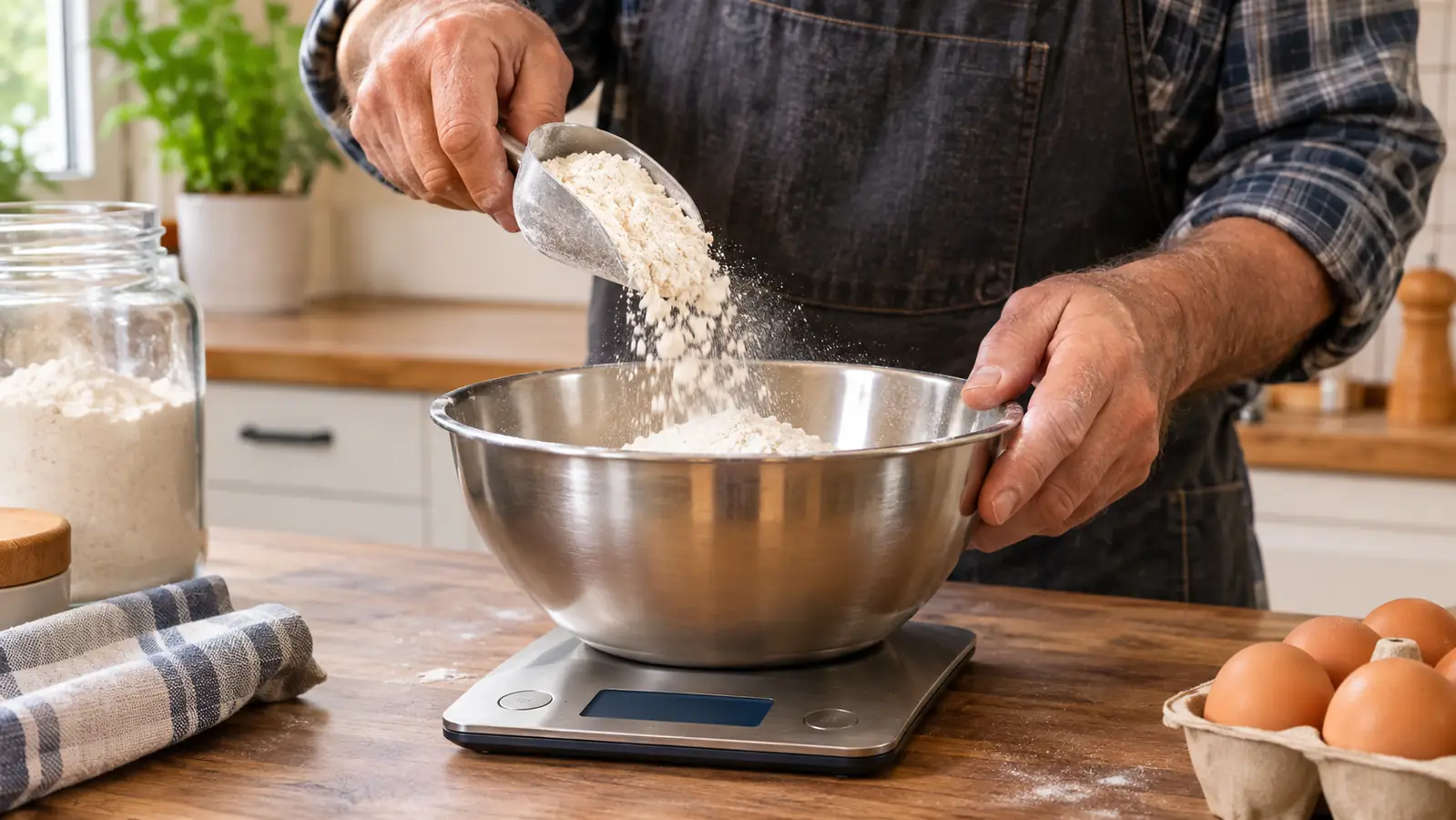
This is the step that changed my baking more than any other. Set your mixing bowl on the scale, press the tare button, and the display returns to zero with the bowl's weight cancelled out. Now you can add flour directly into the bowl and read exactly how much you have added. The tare function is not a luxury. It means you measure your flour, then your sugar, then your salt into the same bowl, pressing tare between each one, and every ingredient is weighed on its own. You also save dishes, because you are not measuring into a separate cup and dumping it in.
The first recipe I weighed start to finish was my grandmother's sugar cookies. In cups, the dough sometimes spread into thin, crispy disks and sometimes puffed into thick rounds. Weighing the flour at 300 grams and the sugar at 200 grams, the dough came together the same way every time. I made three batches in one week and they baked identically. That was the week I stopped trusting my measuring cups.
I use the tare function for everything now, including butter. The wrapper has marks, but they are not precise. One December morning, I was making shortbread and needed 227 grams of butter. I put a small dish on the scale, added slices until the display read 227, and the shortbread came out exactly like the batch from the previous week. It takes about ten seconds and it is exact every time.
Step 3: Weigh dry ingredients slowly, right into the bowl
When a recipe says 250 grams of flour, I scoop with a spoon and let it fall gently into the bowl, watching the display. The Escali Primo reads in 1-gram increments, which is precise enough for any home baking recipe I have tried. I stop when it hits the number, no tapping the scoop to force the last bit out. The one habit to break is dumping. If you pour flour in fast, you will overshoot and have to scoop some back out, which is messy and throws off your rhythm. I learned this the hard way with a batch of biscuits. I overshot 250 grams by 40 grams, scooped some back, and ended up with tough, dry biscuits. Now I stop at 240 and add the last 10 grams a pinch at a time.
On humid days, flour absorbs moisture and weighs more per cup. Weighing removes that variable. I noticed it most in July, when my pie dough suddenly felt stickier than it had in March. The grams did not change, but the flour itself had. That is exactly when a scale earns its place.
For small amounts like salt, baking soda, or yeast, I use a tiny spoon and add a pinch at a time near the end. The display updates quickly, so I can land on the exact gram instead of guessing between the 1-gram marks on a measuring spoon. For yeast, I weigh 7 grams directly into the bowl. With a measuring spoon, I could never tell if I had a rounded or level teaspoon. The scale settles it.
Step 4: Measure liquids by weight too
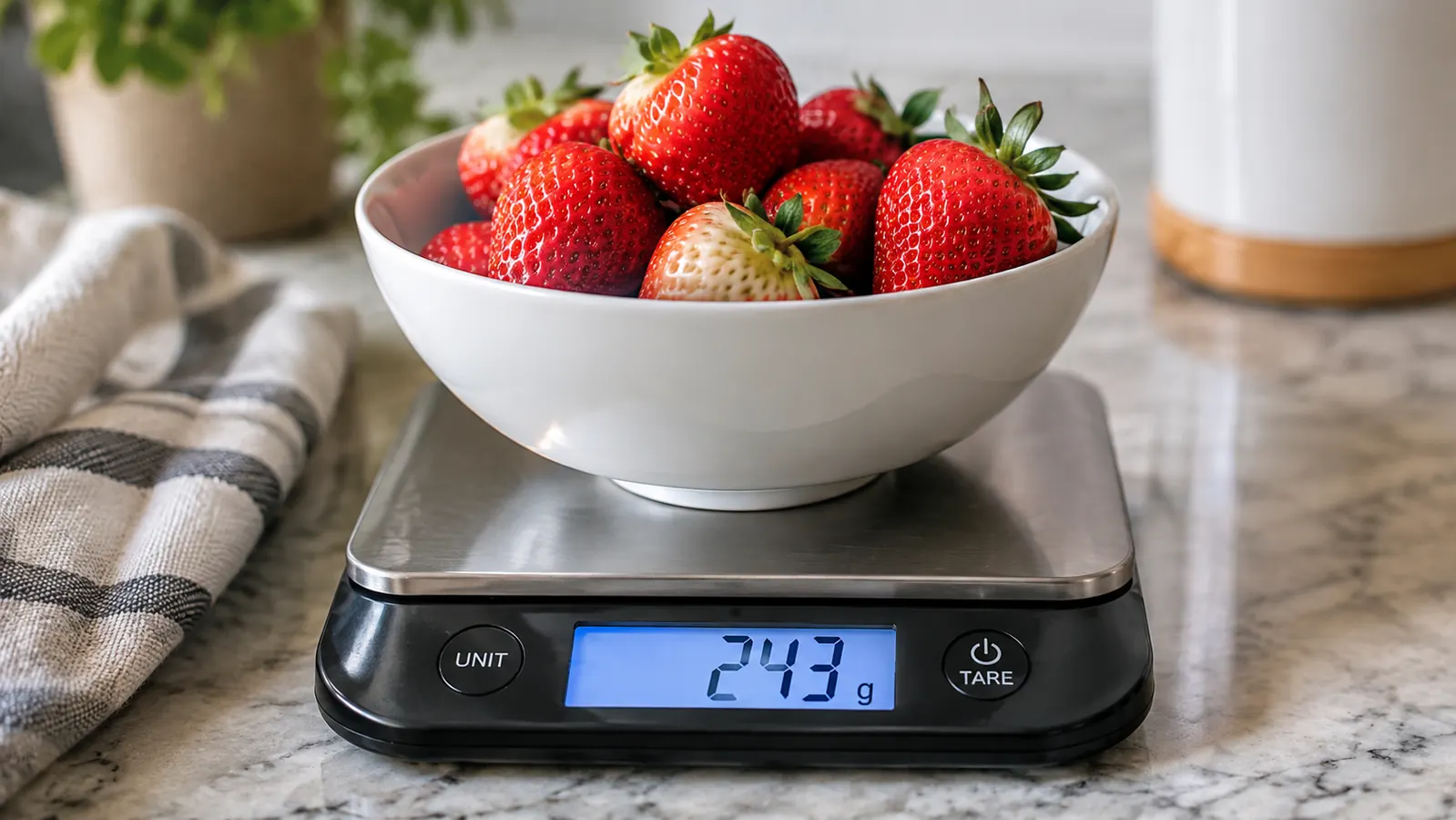
Most people switch to weighing flour and sugar but keep measuring milk and water in a glass cup. That is fine, but weighing liquids is just as easy and more accurate. One milliliter of water weighs one gram, so the math is already done for you. I weigh milk, water, and even molasses right into the bowl. Molasses is the one that sold me. It sticks to the measuring cup, so you never actually get all of it into the batter, and the amount that sticks changes with temperature. Weighed directly into the bowl, there is no sticky cup to scrape and no guessing.
Honey is another sticky one. It pours slowly and clings to the cup. Weighing it into the bowl means the whole amount goes in. I use the tare button, add honey until the display reads the grams, and there is no honey-coated measuring cup to wash. For bread dough, I weigh the water at 350 grams instead of using a one-and-a-half-cup measure. The dough comes out the same hydration every time, even when the humidity changes.
The Primo handles up to 11 pounds, which is far more than any single batch of dough or batter I mix. My largest batch, four dozen rolls for a family gathering, came to about 2.5 kilograms in the bowl, well under the limit. Even my biggest Sunday dinner roll recipe stays well under that number when I build it in the bowl.
Step 5: Write the gram weights on your favorite recipes
The last step is the one that makes the habit stick. Go through the recipes you bake most often and write the gram weight next to each ingredient. You can weigh a cup of your usual flour once, note the number, and from then on you have a personal conversion that matches how you actually scoop.
I converted my pie dough first because it had the most variable results. I weighed a cup of my usual all-purpose flour and got 128 grams. I wrote that on the recipe card. The next week it was 132 grams because the flour had settled in the bag. That small difference was exactly the kind of drift that made my crusts inconsistent. Weighing the flour took my pie crust from sometimes-tender to reliably tender.
I keep a small notebook in the kitchen drawer with the weights for my standard pie dough, my roll dough, and my Christmas cookie recipes. The notebook now has 14 recipes with gram weights. Each one took one extra minute to write down, and each one bakes the same every time. When I bake the same recipe twice in a month, the results match in a way they never did with cups. That consistency is the whole point. Do not try to convert a whole cookbook at once. I tried one winter and gave up by page 20. It was too much at once. Start with one recipe you know well, bake it by weight, and taste the difference. Once you see how reliable it is, you will find yourself reaching for the scale without thinking.
What Else Helps
A scale does the measuring, but a few small habits make the switch easier. Keep your flour in a canister with a wide mouth so you can scoop and sprinkle without making a mess. Use a bowl that is wide enough to see the display while you add ingredients. And when a recipe gives both cups and grams, trust the grams.
The Escali Primo has a sealed control panel, which means flour and sugar dust wipe right off with a damp cloth. That matters in a working kitchen. After a November baking weekend, the counter was dusted with flour. I wiped the scale with a damp cloth and it looked new. The sealed panel is why.
It also has an auto shut-off, so I never worry about the battery draining when I forget to turn it off after a long baking day. It turns itself off after a few minutes of no use, and that has saved the battery more than once. The manufacturer backs it with a 5-year limited warranty, which tells me they expect it to last.
Weighing my flour took my pie crust from sometimes-tender to reliably tender, and it took about one weekend to learn.
What I'd Tell You If We Were Sitting at My Kitchen Table
If you have been baking with cups for decades like I had, the switch can feel like a solution looking for a problem. It is not. The problem is real: flour compresses, cups vary, and your results drift from batch to batch without you knowing why. A scale does not make you a better baker by magic. It just removes one variable so your skill can actually show.
Start with one recipe. Weigh everything, write down the weights, and bake it twice. When the second batch matches the first, you will understand why pastry chefs weigh everything. Then you will be hooked, and the measuring cups will migrate to the back of the drawer.
Give your baking the same head start I had
The Escali Primo reads to the gram, tares right in the bowl, and has held up through about two years of weekend baking in my kitchen. If you are ready to bake by weight, this is the scale I would buy again.
Amazon Check Today's Price on Amazon →