
The first time I creamed butter and sugar properly, I was forty-six years old and had already been baking for almost twenty years. I had always been told to just beat it until it looked fluffy. Nobody told me what fluffy actually meant, or what I was looking for, or why the whole cookie recipe depended on it. So I would beat it for a minute, decide it looked fine, and wonder why my cookies came out flat and tough instead of soft and tender.
The answer was not a better recipe. The answer was a better creaming method, and a hand mixer I could actually control. I bake in a small kitchen with one standard oven that runs a little hot, so I have no room for a stand mixer and no patience for gadgets that take up counter space. A good hand mixer does the job well. Here is how I cream butter and sugar with mine, step by step, the way I wish someone had shown me years ago.
The hand mixer I reach for every single batch
The KitchenAid 5 Ultra Power Speed Hand Mixer has five speeds, a lockable swivel cord, and beaters that release with one press of a button. It is the mixer I use for every cookie and cake I bake. Check today's price on Amazon and see why it earns its place in my small kitchen.
Amazon Check Today's Price on Amazon →Step 1: Start with butter that is soft, not melted
This is the step that decides everything. Butter that is too cold will not cream; it will just break into lumps. Butter that is melted will not cream either; it will make a greasy puddle that never gets light. You want butter that yields gently when you press it with a finger, the way a ripe peach does, but still holds its shape. In my kitchen, that usually means leaving the butter on the counter for about an hour before I start, and on a cold January morning, closer to ninety minutes.
If I am in a hurry, I cut the butter into tablespoon-sized pieces and let them sit for twenty minutes. I do not use the microwave. A microwave softens butter unevenly, and melted spots ruin the creaming. I have made that mistake enough times to know better. I learned it one December when I was making a double batch of my mother's sugar cookies for the parish bake sale. I was in a hurry, the kitchen was cold, and I softened the butter in the microwave because I thought it would save time. The cookies spread into flat, greasy discs, and I had to start over. That batch taught me more about creaming than any recipe book ever did. Ray still teases me about those discs, but he ate every one of them anyway.
The butter should be at room temperature, around 65 to 70 degrees. If your kitchen is cold in the winter, give it more time. If your kitchen is warm, check it sooner. The goal is the same: soft enough to cream, solid enough to hold air. I check by pressing a finger into the side of the stick. If it leaves a clean dent without collapsing, it is ready. That is a more reliable test than the clock, because every kitchen runs at a different temperature.
Step 2: Cream on a low speed first, then build up
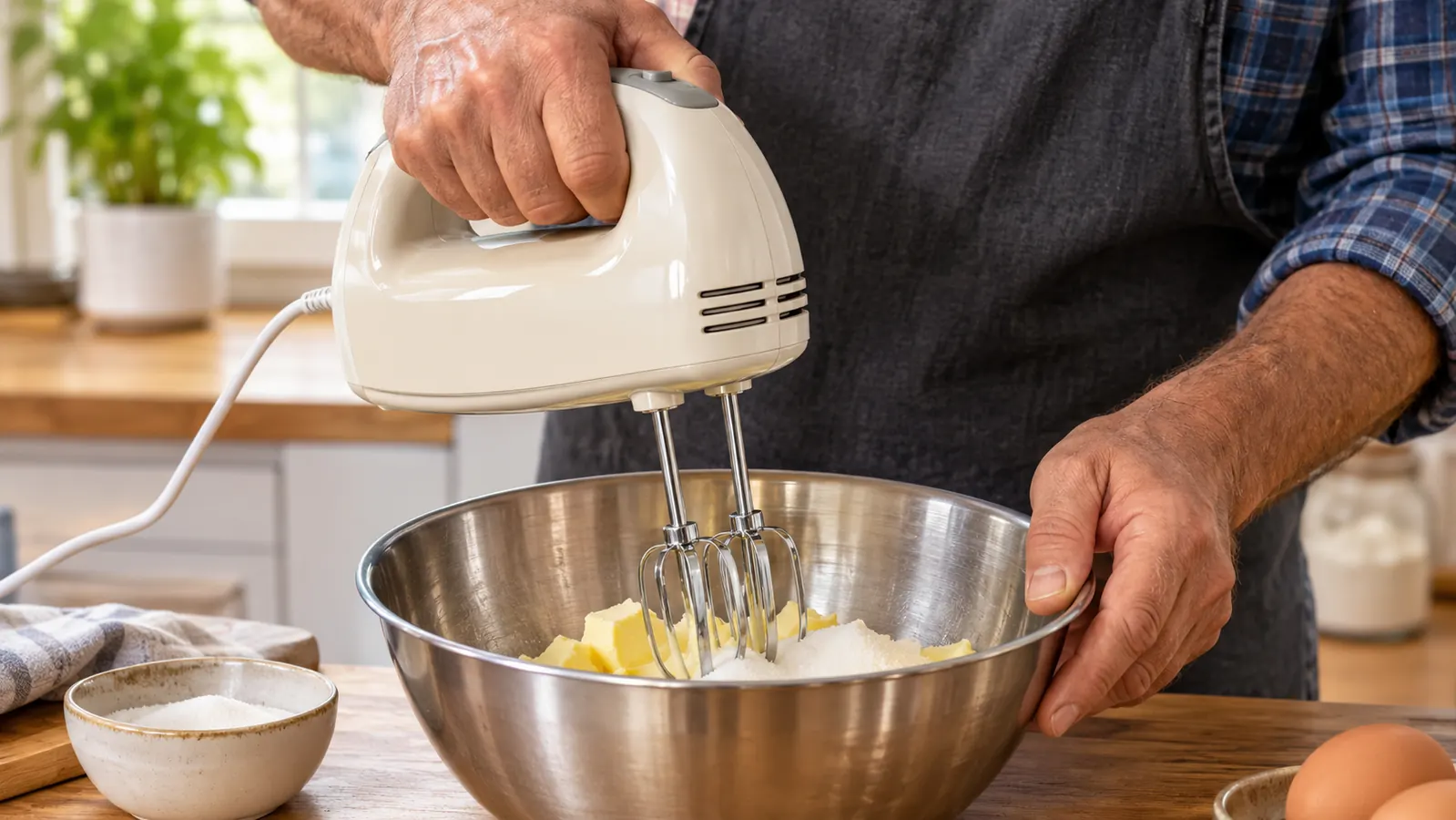
I put the softened butter and sugar in a large bowl and start my KitchenAid hand mixer on speed one. This is the part people skip. They turn the mixer to high and hope for the best. But starting low lets the butter and sugar come together without spraying everywhere, and it gives the mixture a chance to begin trapping air gently.
Once the butter and sugar are combined, I move up to speed two or three. I do not go straight to the highest speed. The KitchenAid 5 Ultra Power has five speeds, and for creaming I rarely need more than speed three. The higher speeds are for whipping cream or egg whites, not for creaming butter.
I also scrape the bowl once or twice during this step. Butter and sugar like to collect on the sides of the bowl, and if you do not scrape them back in, your creamed mixture will be uneven. A rubber spatula takes ten seconds and saves you from lumps of uncreamed butter in your cookies.
Step 3: Beat until the mixture is light and fluffy, about 3 to 5 minutes
This is the step I got wrong for years. I would beat for a minute, see the mixture look slightly pale, and stop. The truth is that proper creaming takes time. With a hand mixer on medium speed, I beat the butter and sugar for a full three to five minutes, scraping the bowl every minute or so. When I first started timing it properly, I was shocked at how long a real creaming took, because I had been doing it for a fraction of the time.
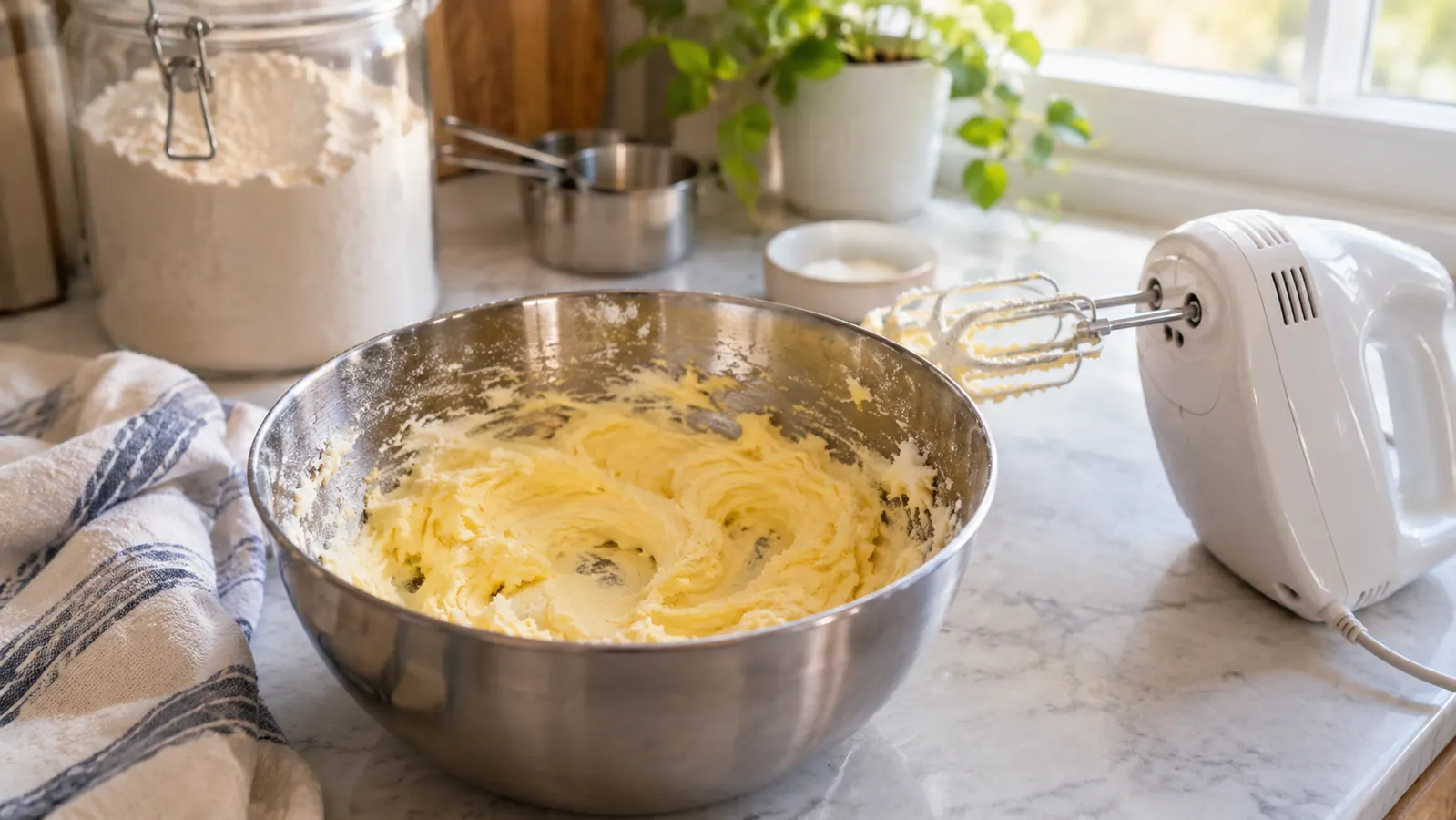
What am I looking for? The mixture should change from a dense yellow paste to a pale, light, almost fluffy mass. When you drag a spatula through it, it should hold a soft peak. The sugar should be mostly dissolved, so the mixture feels smooth between your fingers rather than gritty. When you lift the beaters, the mixture should fall back into the bowl in soft ribbons, not sit in a stiff lump. Last November I made three batches of the same oatmeal cookie recipe on three consecutive Saturdays, just to see what the creaming time actually changed. The first batch got one minute of creaming and came out flat, with a tight crumb. The second got three minutes and was noticeably lighter. The third got five minutes and produced the soft, puffy cookies I remembered from my mother's kitchen. Same recipe, same oven, same bowl.
This is where the air gets trapped, and that trapped air is what makes your cookies light and your cakes tender. If you stop too early, your baked goods will be dense and flat. If you beat too long, the butter can start to break down and get greasy. Three to five minutes on medium is the sweet spot. The only difference between those three batches was how long I let the mixer run. Now I set a timer, because my sense of time goes out the window when I am talking to Ray while I bake. That experiment cost me three sticks of butter and a lot of oatmeal, but it settled the question for good.
Step 4: Add eggs one at a time, beating well after each
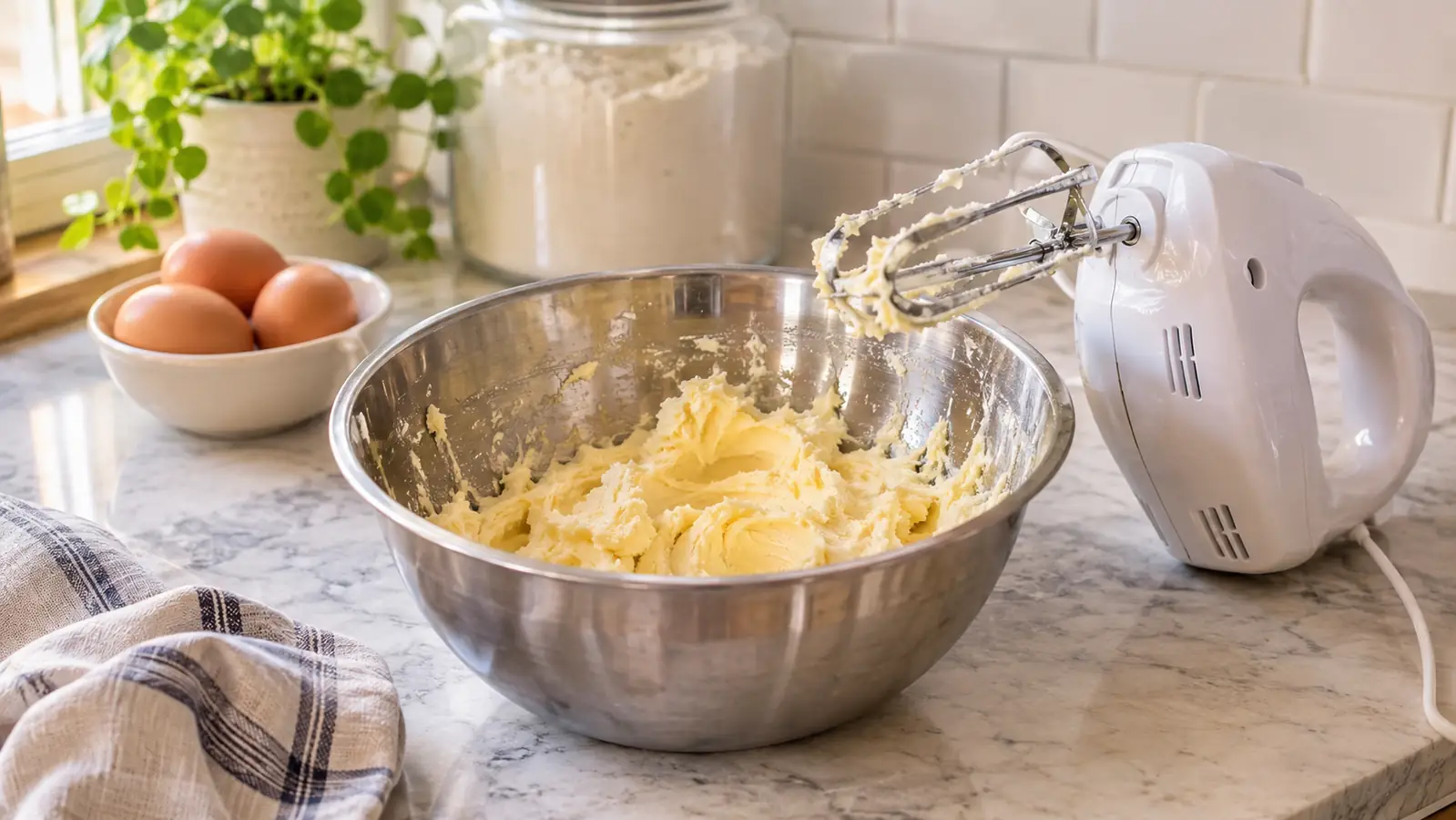
Once the butter and sugar are light and fluffy, I add the eggs one at a time. I crack the first egg into a small dish first, then add it to the bowl. This keeps stray bits of shell out of the mixture, and it also lets me check that the egg is fresh before it goes in. I do this with every egg, not just the first one, because one bad egg can ruin a whole batch.
I beat on speed two after each egg, just until the egg disappears into the mixture. If the eggs are cold, they can make the butter seize up. I usually take my eggs out of the refrigerator with the butter, so they are both at room temperature by the time I need them. If I forget, I set the eggs in a bowl of warm water for five minutes before cracking them. Cold eggs and a fast hand are the two ways to break a creamed mixture, and I have tried both.
The mixture should look smooth and glossy after each egg. If it looks curdled or separated, the butter was probably too cold or the eggs were added too fast. It will often come back together once you add the flour, but it is worth slowing down and adding the eggs more gently next time. I still remember the Sunday I nearly ruined Ray's birthday cake because I added the eggs too fast. The mixture turned into something that looked like curdled milk, and I was sure the cake was doomed. I kept beating on speed two, added the flour slowly, and the batter came back together well enough that nobody at the table knew anything had gone wrong. Now I add each egg and beat for about twenty seconds, just until the yolk disappears into the bowl. It is the kind of small discipline that separates a good cake from a great one.
Step 5: Know when to stop and fold in the dry ingredients
The creaming is done when the mixture is pale, light, and fluffy, and the sugar has dissolved enough that you cannot feel the grains when you rub a little between your fingers. That is your signal to stop the mixer and switch to a spatula for the dry ingredients. If you are not sure, take a tiny bit between your thumb and forefinger and rub. Gritty means keep beating. Smooth means you are ready.
I fold the flour in by hand, in two or three additions, with a gentle cutting and turning motion. The hand mixer is perfect for creaming, but it is too aggressive for the final flour addition. Overmixing the flour develops gluten, and gluten is what makes cookies tough. Folding by hand gives you tender cookies every time. It should take about a minute, not ten. I use a large rubber spatula and make a slow sweeping cut down the middle of the bowl, then turn the bowl a quarter turn and repeat. By the time I have gone around the bowl eight or ten times, the flour streaks are gone and the batter is still light.
One more note: the KitchenAid 5 Ultra Power makes this easy because the beaters release with one press of a button, so I can switch from mixing to folding without fighting with stuck beaters. The lockable swivel cord also keeps the cord out of my way, which matters in a small kitchen where every inch of counter space counts. Last spring I made a lemon pound cake for the church coffee hour using this folding method, and two different women asked me what I did to make it so tender. The answer was not a fancy ingredient. It was simply that I stopped using the mixer before the flour went in. That cake is still on the recipe card taped inside my cabinet door.
What Else Helps
A few small things make creaming easier. Use a bowl that is wide enough for the beaters to move freely; a narrow bowl traps the mixture and makes it harder to get air in. Keep your mixer speed moderate, and resist the urge to walk away while it runs. A hand mixer is fast, and creaming can go from perfect to overbeaten in less than a minute. Also, scrape the bowl often. It is the single most skipped step in home baking, and it is the one that fixes the most problems.
I also keep my KitchenAid hand mixer in a drawer near the counter, not in a cabinet, because I reach for it almost every weekend. The 2-pound weight means it is light enough to hold with one hand while I scrape with the other. The 5 speeds cover everything from folding in chocolate chips at speed one to whipping cream at speed five. For a home baker with a small kitchen, it is the right tool for the job.
Proper creaming does not take a special technique. It takes three to five minutes of patient beating on medium speed, with a bowl scrape or two along the way.
Make your next batch of cookies your best batch
If your cookies come out flat or your cakes come out dense, the creaming method is usually the reason. The KitchenAid 5 Ultra Power Speed Hand Mixer gives you the control you need, with five speeds and beaters that release at the press of a button. Check today's price on Amazon and start baking with a mixer you can trust.
Amazon Check Today's Price on Amazon →