
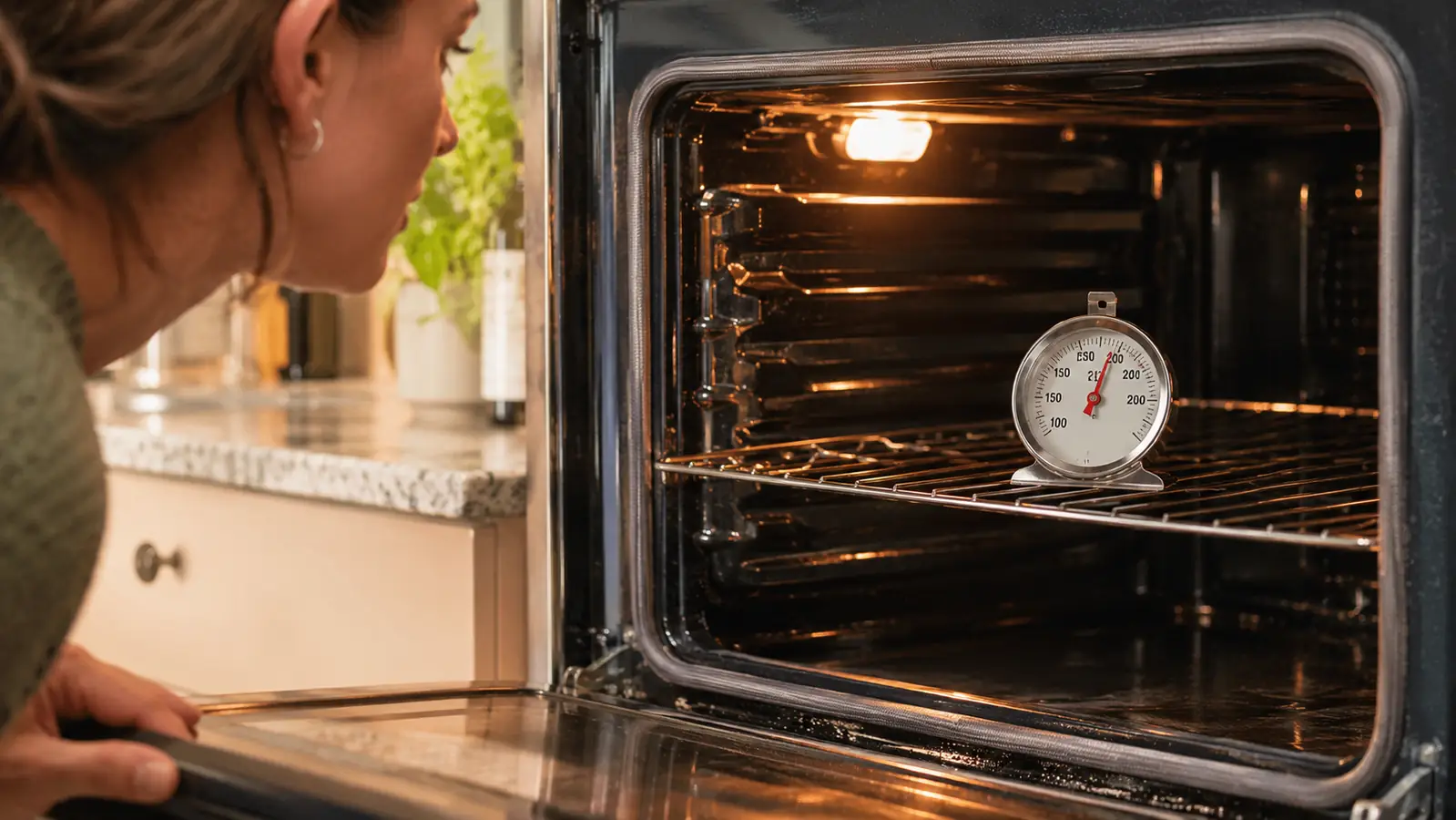
I've baked for my family and the parish bake sale for about thirty years, and my kitchen is small, with one electric oven that runs a little hot. I learned that the hard way: cookies that looked perfect on top and burned on the bottom, cakes that domed in the middle, and holiday pies that needed twice as long as the recipe said. The cheapest fix I've found is a Taylor oven thermometer, and it's not close. It cost less than a batch of good butter, and it has saved me more batches than I can count.
This is not a fancy gadget. It's a simple analog thermometer that sits on the rack and shows me what the oven is actually doing. In this article I'll give you ten reasons it's the best small purchase I've made for baking, based on many batches, not one. If you've ever blamed a recipe that turned out fine for someone else, this is for you.
Know what your oven is really doing
If your oven runs hot or cold, this little dial will tell you before you waste another batch. Check today's price on Amazon.
Amazon Check Today's Price on Amazon →It tells you the truth your oven won't
My oven says 350 degrees on the dial, but the Taylor has shown me it actually runs closer to 365 once it settles. That difference changes baking. A cake that should bake at 350 will brown too fast at 365, and the inside won't have time to cook through. The edges set before the middle rises, so you get a dome and a raw center. Once I knew the real temperature, I started setting my oven lower and everything came out even. The thermometer doesn't fix the oven. It just tells you what you're working with, and that's the first step. You can't adjust for a problem you don't know you have.
It turns a hot oven into a predictable one
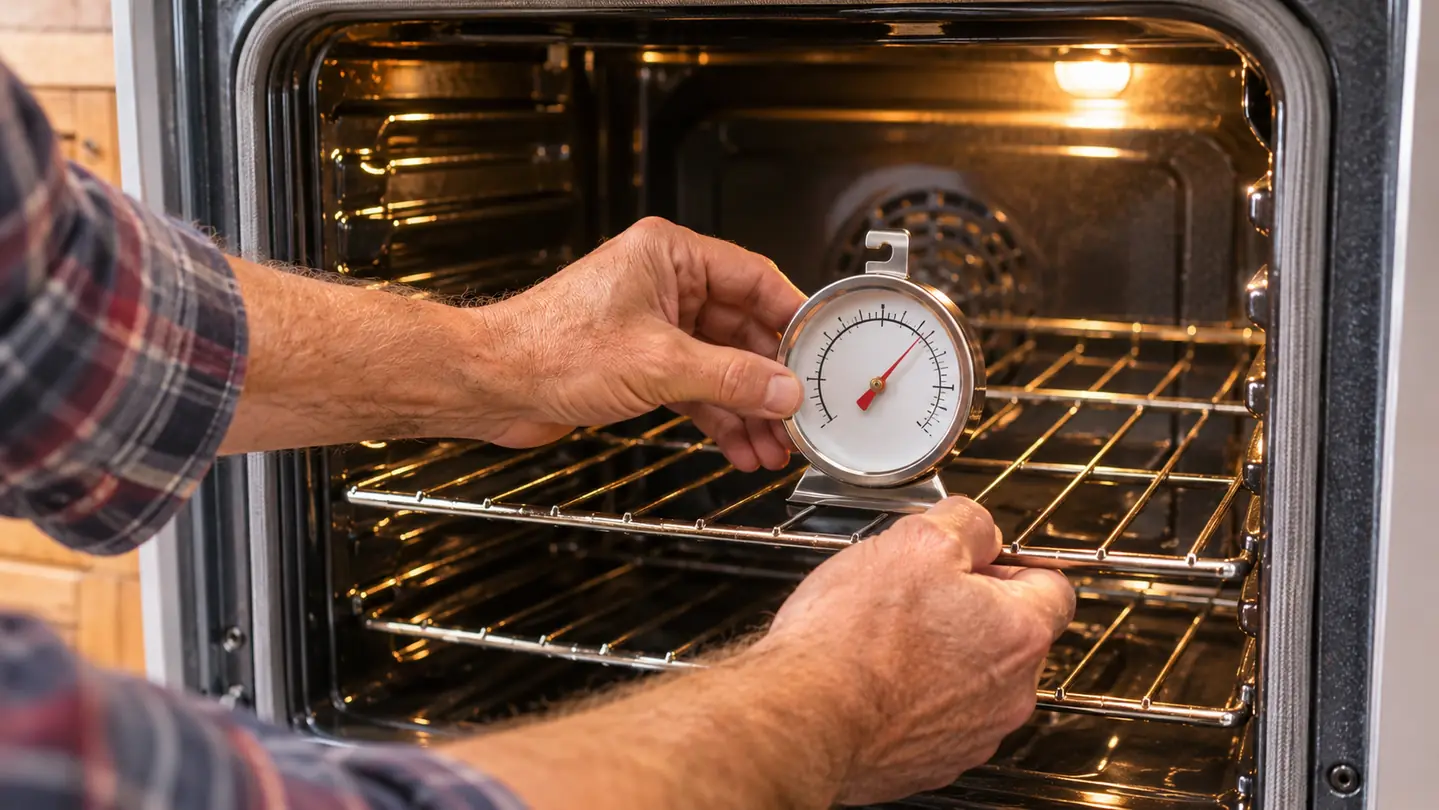
Every oven cycles. It heats up, goes a little over, then drops back down. The Taylor shows me that cycle, so I know when to put the pan in. I wait until the needle settles near the temperature I want, then I load the tray. That small habit fixed my burnt-bottom cookies. The oven still runs the same, but I no longer guess. I look at the dial, I wait, and I bake. It's not an exciting change, but it's the difference between cookies that look good and cookies that actually are good. When I'm filling six trays for the bake sale, I can't babysit each one, so knowing the cycle matters even more.
It fits in a drawer until you need it
My kitchen has almost no counter space, so I don't want a gadget that lives on the counter. This thermometer is small, about three inches across, and it goes in the drawer with my other baking tools. When I need it, I pull it out, set it on the rack, and it's ready. It doesn't need to be plugged in, and there's nothing to set up after it. That matters in a small kitchen, where every inch of counter is already taken by a mixer, a flour jar, and my grandmother's recipe box. A tool that stores flat and works in seconds is a tool I'll actually use.
It works for every kind of baking
I use it for cookies, cakes, bread, pies, and the big November and December baking runs. It reads from 100 to 600 degrees Fahrenheit, so it covers everything from a slow proofing setup to a hot oven for crusty bread. I don't have to remember different settings or switch modes. I just set it on the rack and read the dial. One tool covers every recipe I make, and it does the same job whether I'm baking a single loaf or a hundred cookies for the sale. That's the kind of simple I appreciate at my age. The range also means I can use it for roasting a turkey or warming plates, so it's not just a baking tool.
It pays for itself in one ruined batch
A batch of good butter cookies is not cheap, and when they burn on the bottom, you throw them out and start over. One ruined batch costs more than this thermometer. Since I started using it, I have not wasted a single tray of cookies to a hot oven. That alone makes it the cheapest upgrade in my kitchen. It's a small purchase that protects every batch after it. Over two years of weekend baking, that adds up to a lot of saved butter, sugar, and chocolate. I'd rather spend the money once on a thermometer than keep throwing out ingredients.
It makes holiday baking calmer
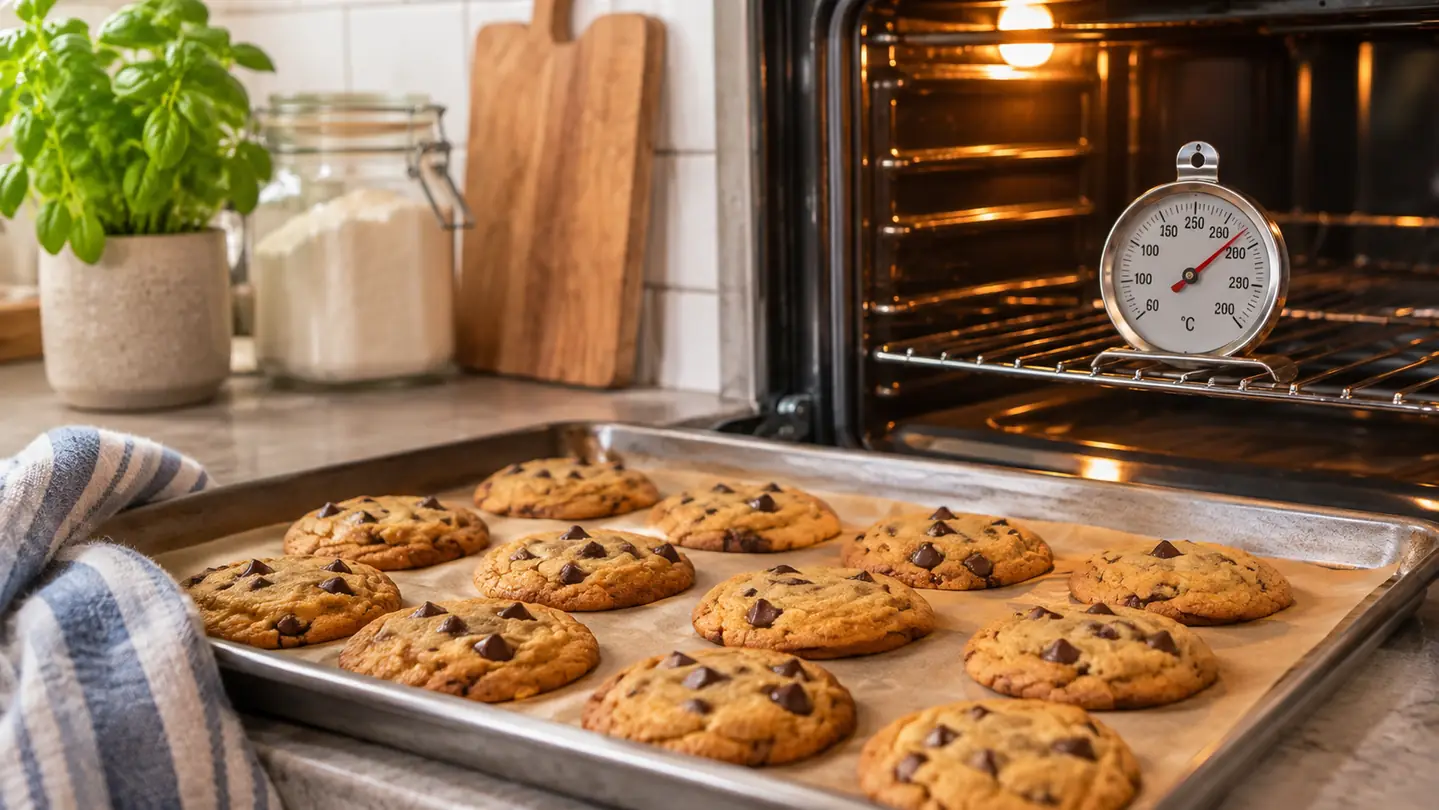
In November and December, I bake cookies and pies for the parish bake sale, and the kitchen gets busy. The last thing I need is to open the oven door every five minutes because I don't trust the temperature. The Taylor sits on the rack, and I can glance at it while I roll out dough. It keeps me from second-guessing, which keeps the whole afternoon calmer. When the grandkids are helping and the timer is going off, the last thing I want is a surprise. Knowing the oven is at the right temperature lets me focus on the baking instead of worrying about it.
It's simple enough for anyone to use
My granddaughter can read the big dial as easily as I can. The large display shows the temperature at a glance, and the dial marks the right zones clearly. If you bake once a month or every weekend, you don't need to learn anything new. You just put it in the oven and read it. That matters for a tool that's supposed to make baking easier, not add another thing to figure out. It's the kind of simple design that doesn't get in the way. I've used thermometers that required a degree in engineering to set up; this one doesn't.
It helps you trust your recipes again
For years I blamed my recipes when cakes came out lopsided. Then I found out the oven was the problem. Once I set the temperature based on the Taylor, the same recipes started working the way they were written. It's a relief to know the recipe was fine all along. Now when something goes wrong, I know it's me or the ingredients, not the oven, and that makes me a better baker. It also means I trust my old recipe cards again, and those are the ones my family asks for every holiday.
It lasts through years of heavy use
The Taylor is built with sturdy stainless steel, and it has held up to daily baking in my hot oven. I've dropped it and knocked it against a rack, and it still reads true. I can't say that about every tool in my drawer. It's one of the few things I've bought once and never had to replace. The glass and stainless steel construction wipes clean easily, and I just store it in the drawer with the rest of my tools. For something that lives in a hot oven, it has been remarkably sturdy.
It's the first thing I check before I preheat
My routine now is simple. I take the Taylor out of the drawer, set it on the middle rack, and turn the oven on. When the needle settles where I want it, I know the oven is actually ready. That two-second check has saved me more batches than I can count. If you bake as much as I do, you'll reach for it the same way. It becomes part of the rhythm: thermometer on the rack, oven on, coffee poured, and then the real baking starts. It's the last thing I check before the first pan goes in.
What I'd Skip
Every tool has its limits, and this one is no different. If your oven is brand new and you've already tested it with an accurate thermometer, you may not need another one. And if your real problem is uneven baking because one side of the oven runs hot, a thermometer on the middle rack won't fix that by itself. It tells you the temperature, but it can't fix a broken heating element or a faulty seal. I'd skip it if you expect it to solve every oven problem. Buy it for the information, not for a cure. It's a tool for learning how your oven behaves, not a repair part.
When my dial said 350 and the Taylor read 365, every recipe I trusted suddenly made sense.
Start with the cheapest fix in your kitchen
If your oven runs hot or cold, the Taylor oven thermometer will tell you before you waste another batch. It's a small tool that makes a big difference.
Amazon Check Today's Price on Amazon →