
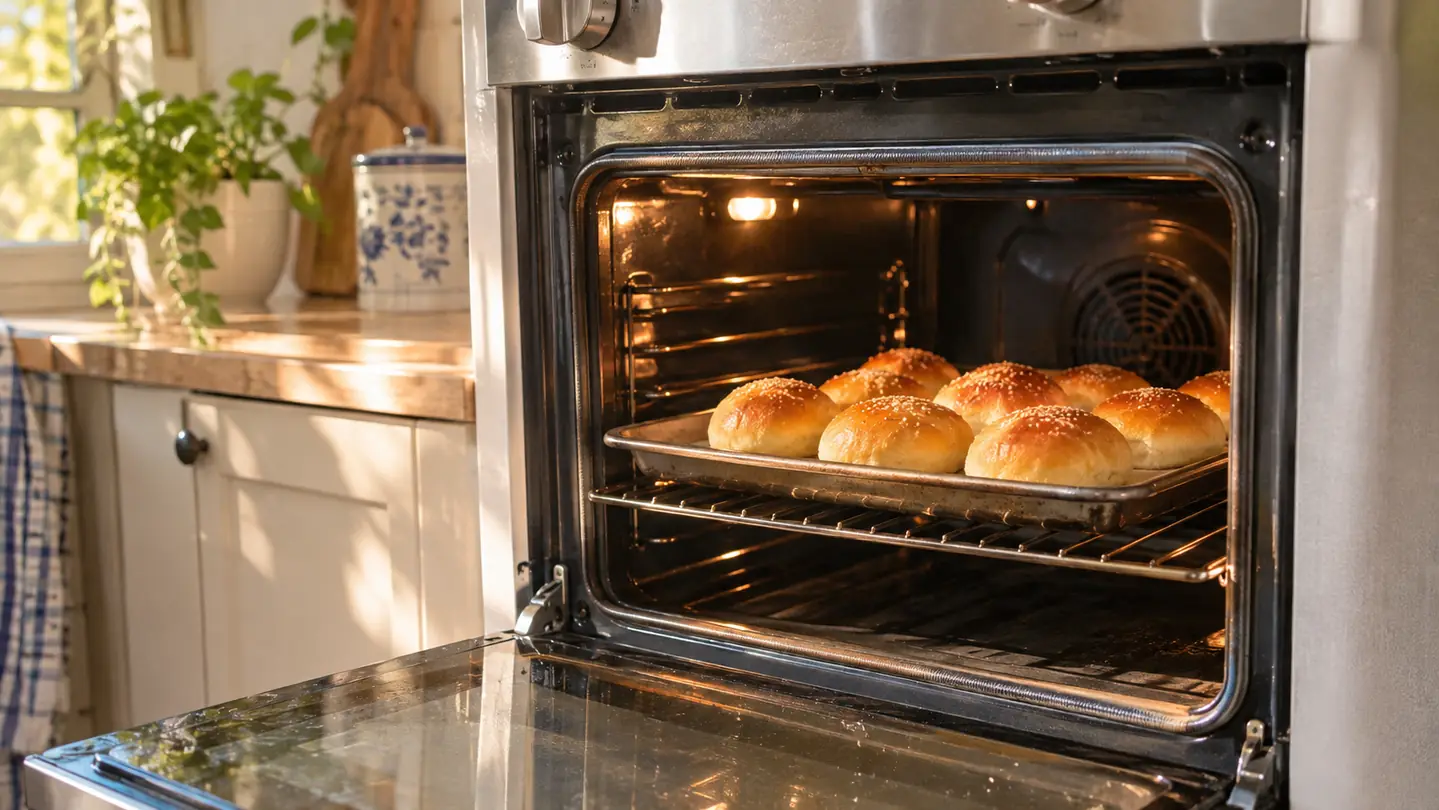
I have a confession that will not surprise anyone who bakes in an older house: my oven lies to me. It is a standard electric oven, nothing fancy, and it runs about 15 degrees hot. I set the dial to 350 and the oven settles in near 365. For years I blamed myself for cookies that burned on the bottom while the tops were still pale. Then I bought a Taylor oven thermometer, the 3-inch analog model, and learned the problem was never my baking. It was my oven.
I have now used this thermometer for about two years, through dozens of batches of cookies, countless pies, and the full November and December holiday run that ends at the parish bake sale. It is one of the few tools in my small kitchen that I would replace the same day if it broke.
The Quick Verdict
A simple, accurate, durable oven thermometer that pays for itself in the first batch of cookies. If your oven runs hot or cold even a little, this is the fix.
Amazon Check Today's Price →Know what your oven is actually doing
If your cookies burn on the bottom or your cakes dome in the middle, your oven may be the problem. A Taylor oven thermometer tells you the truth in seconds.
Amazon Check Today's Price on Amazon →How I've Used It
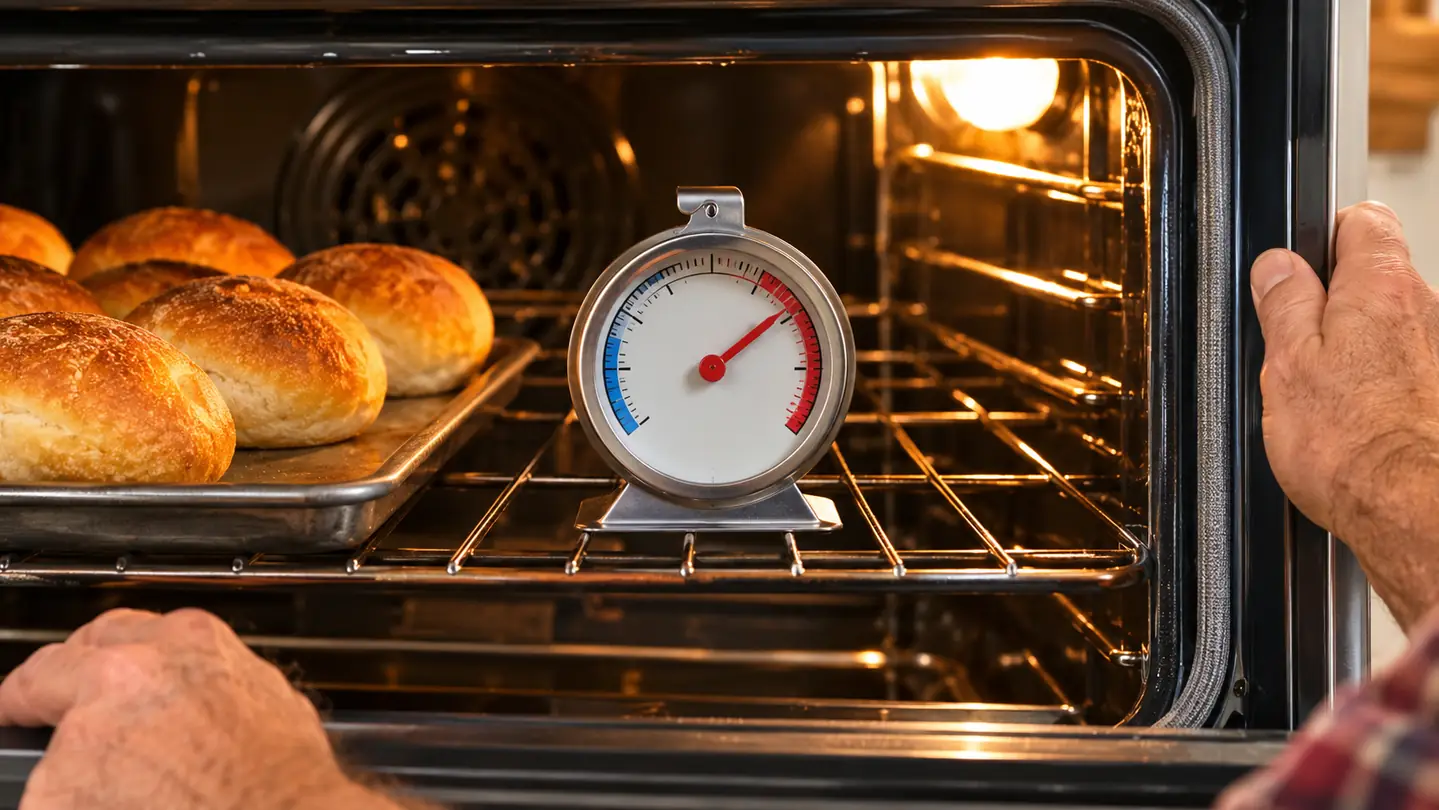
My kitchen is small. I have maybe three feet of counter space between the sink and the stove, and I do most of my mixing by hand because I gave my stand mixer to my daughter when we downsized. So I do not have room for gadgets that need attention. The Taylor thermometer is the opposite of that. It is a 3-inch dial with a stainless steel body, a clip on the back, and a big face I can read without my glasses. I hang it from the center wire rack in my oven and I leave it there. That is the whole installation.
The day it arrived, I set my oven to 350 and waited for the preheat bell. The thermometer read about 365. I checked it again ten minutes later: 365. I moved it to the upper rack, then the lower rack, and it stayed within a few degrees of 365 in both spots. That told me my oven was consistently hot, not just hot in one corner. I started setting the dial to 335 when I wanted 350, and my cookies stopped burning on the bottom. The first batch of chocolate chip cookies I baked after that adjustment was the best I had made in a year.
I use it for everything now. Roasting a chicken, baking a pie, proofing bread in a slightly warm oven, even heating a casserole for Sunday dinner when the grandkids come over. The thermometer reads from 100 to 600 degrees Fahrenheit, which covers every temperature I have ever needed in a home oven, and the dial has clearly marked zones so I can see at a glance whether the oven is in the right range. It is not a tool I think about much. That is exactly what I want.
A few weeks after it arrived, I wanted to know whether that offset held at a higher setting, because my sugar cookies bake at 375 and they had been spreading too thin for as long as I could remember. I had tried chilling the dough for an hour, I had tried a different recipe, I had even blamed the butter. So one Saturday I set the oven to 375, waited for the preheat bell, and watched the Taylor thermometer. It read about 390, the same 15 degrees hot. I turned the dial down to 360, baked a test sheet, and the cookies came out with the thickness I remembered from my mother's kitchen. That afternoon I wrote 'set 15 degrees low' on a piece of masking tape and stuck it to the top of my oven, where I still see it every time I bake. It sounds like a small thing, but it changed every recipe I made after that, and I smile every time I see that tape because it reminds me that the problem was never me.
Why an Oven Thermometer Matters
Here is what I did not understand for the first twenty-five years of baking: the temperature dial on an oven is a suggestion, not a promise. The thermostat inside the oven decides when to heat and when to stop, and those thermostats drift as the oven ages. A 15-degree error sounds small, but in baking it is the difference between a chewy cookie and a crisp one, a moist cake and a dry one, a pie that sets and a pie that runs.
The Taylor thermometer does one job and does it well. It tells you the actual temperature inside your oven. Not the temperature the dial says, not the temperature the oven thinks it is, the real temperature. That information changes how you bake. Once I knew my oven ran hot, I stopped guessing. I set the dial lower and I trusted the thermometer. My success rate on new recipes went up immediately because I was finally baking at the temperature the recipe writer intended.
Let me give you a concrete example. A few months before I bought the Taylor, I made my grandmother's pound cake for the parish bake sale. The recipe calls for 325 degrees and an hour and ten minutes. I set the dial to 325, put the cake in, and checked it at the hour mark. The top was a deep brown and the center was still wet. I had wasted a pound of butter, a dozen eggs, and an afternoon. Once the thermometer showed me my oven ran about 15 degrees hot, I made the same cake with the dial set to 310, and it came out with a pale golden top and a fully set center. Same recipe, same pan, same oven. The only difference was the temperature. That is what a 15-degree error costs you in baking. It is not just about cookies. It is about every recipe that depends on the oven being where the dial says it is. I tell that story to anyone who asks why I keep a thermometer in the oven. It is not about being a perfectionist. It is about not wasting food and not wasting time.
I should also say what this thermometer is not. It is not a probe thermometer that stays in the meat while it cooks. It is not a digital thermometer with a timer. It is an analog dial that sits in your oven and tells you the temperature. If you want to know when your roast hits 145 degrees, you need a different tool. If you want to know whether your oven is actually at 350 when you put the cake in, this is the tool.
Accuracy and the Fast Reading System
The listing says the Taylor thermometer has a fast reading system and high accuracy, and in my experience that is true. The needle moves quickly when the oven is heating, and it settles into a stable reading within a minute or two of the oven reaching temperature. I have checked it on more than one rack, and the readings agree within a few degrees. That is close enough for me.
One thing I appreciate is the 50-degree resolution marks on the dial. That sounds coarse, but for an oven thermometer it is exactly right. I do not need to know that my oven is at 362.4 degrees. I need to know that it is sitting near 365, which tells me to set the dial about 15 degrees lower. The large, colorful dial with marked optimal cooking zones makes that easy even in the dim light of an oven interior.
I tested the Taylor thermometer against a borrowed digital probe thermometer clipped to the same rack on a quiet Tuesday morning in February. I set the oven to 350, let it preheat, and then waited an extra ten minutes to be sure the temperature had settled. The Taylor read 365 and the probe read 367. That three-degree difference is well within what I need for baking. I also tested it at a lower temperature, 250 degrees, for proofing bread dough. The Taylor read 262 and the probe read 264. The thermometer is consistent across the range I actually use, which matters more to me than a laboratory-grade calibration I would never notice in a batch of cookies. I repeated the test a week later and got the same numbers within a degree. I also checked it at 400 degrees, which I use for roasting vegetables, and it read 414, right in line with the pattern. That consistency tells me the thermometer is reliable, not just accurate once.
The response time of 500 milliseconds is listed for the thermometer's sensor, and in practice the needle responds quickly to changes. When I open the oven door to check a cake, the temperature drops and the needle dips, then climbs back as the oven recovers. That is normal for any oven thermometer. The important thing is that it gives me a true reading of what my oven is doing, not what I wish it was doing.
Durability and Daily Use
I have had this thermometer for about two years and it lives in my oven full time. That means it has been through hundreds of preheat cycles, countless open-door temperature drops, and the humidity of a full holiday baking day. The stainless steel body has held up perfectly. The glass face has never fogged or cracked. The needle still returns to the same spot every time I check the temperature, which tells me the mechanism has not drifted.
The care instructions say not to put the thermometer in the dishwasher, and I do not. I wipe the metal with a damp cloth when it gets dusty, and that is all it has ever needed. The included instruction manual is simple and I read it once and filed it away. There is nothing to maintain and no digital display to fail. It is a mechanical tool and it works like one.
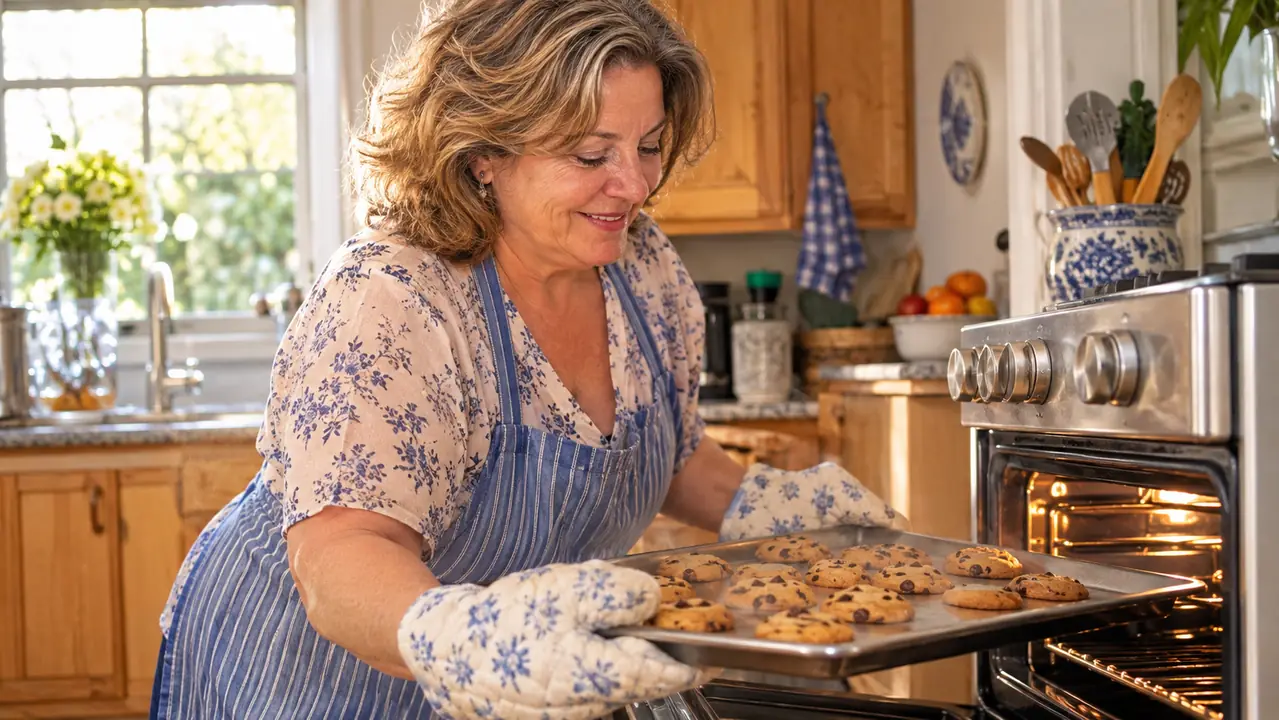
The real test came last December, when I baked for the parish bake sale. Over three days I made eight dozen cookies, four pies, and two loaves of quick bread. The oven was on from early morning until late afternoon each day, and the thermometer sat on the center rack the whole time, swinging from 350 to 400 and back as I opened the door to rotate pans. When I pulled it out on the third evening to wipe it down, the needle still sat exactly where it had the first day I hung it. That kind of consistency is what I want from a tool I trust with a holiday baking run. I have dropped it once, too, when I was cleaning the oven, and it landed on the linoleum without a scratch. The glass face is still clear and the needle still moves smoothly. The oven thermometer is the kind of tool you forget is there until you need it, and then you wonder how you ever baked without it.
I will note that the thermometer is light, about 2.88 ounces, so it clips easily to a wire rack and stays put. I have never had it fall into my food, even when I am sliding a heavy sheet pan in and out. The clip is sturdy and the thermometer hangs straight. After two years of daily use, I have no complaints about the build quality.
The day I hung the Taylor thermometer in my oven, I found out my oven ran 15 degrees hot. I adjusted my dial and my cookies stopped burning on the bottom. That one number changed my baking more than any recipe I have found.
Who This Is For
This thermometer is for anyone who bakes and suspects their oven is not telling the truth. If your cookies burn on the bottom, if your cakes dome in the middle, if your bread browns too fast on the outside while the inside is still doughy, your oven may be running hot or cold. A Taylor oven thermometer will tell you in one preheat cycle.
It is also for people like me who bake for family and for the parish bake sale and cannot afford to waste a batch of butter and sugar on a guess. At the current price, the thermometer pays for itself the first time it saves a batch of cookies. It is especially useful in November and December, when I am baking a big run of cookies and pies and every batch has to come out right.
Who Should Skip It
If your oven is brand new and you have verified its temperature with another thermometer, you may not need this. If you want a thermometer that also times your roast or sends a reading to your phone, this is not that tool. It is an analog dial that sits in your oven and tells you the temperature. It does not have a timer, a probe, or a digital display.
And if you are hoping a thermometer will fix a problem that is not about temperature, it will not. If your oven heats unevenly, with hot spots in one corner, a thermometer will show you the average temperature but it will not fix the hot spots. If your recipes are unreliable, a thermometer will not make them reliable. It is a tool for one specific job, and it does that job very well.
What I Liked
- Accurate and consistent: matched a borrowed digital probe thermometer within a few degrees
- Large, easy-to-read dial with marked optimal cooking zones
- Sturdy stainless steel construction that has lasted two years of daily use
- Simple to use: clip it to a rack and leave it there
- Covers a wide range from 100 to 600 degrees Fahrenheit
- Mechanical design with no digital display to fail
Where It Falls Short
- Not a probe thermometer; it only measures oven air temperature
- No timer or digital readout
- 50-degree resolution marks are coarse for precise calibration work
Stop guessing what temperature your oven is at
Two years in, I would not bake without my Taylor oven thermometer. If your oven runs hot or cold, this is the cheapest fix in your kitchen.
Amazon Check Today's Price on Amazon →