
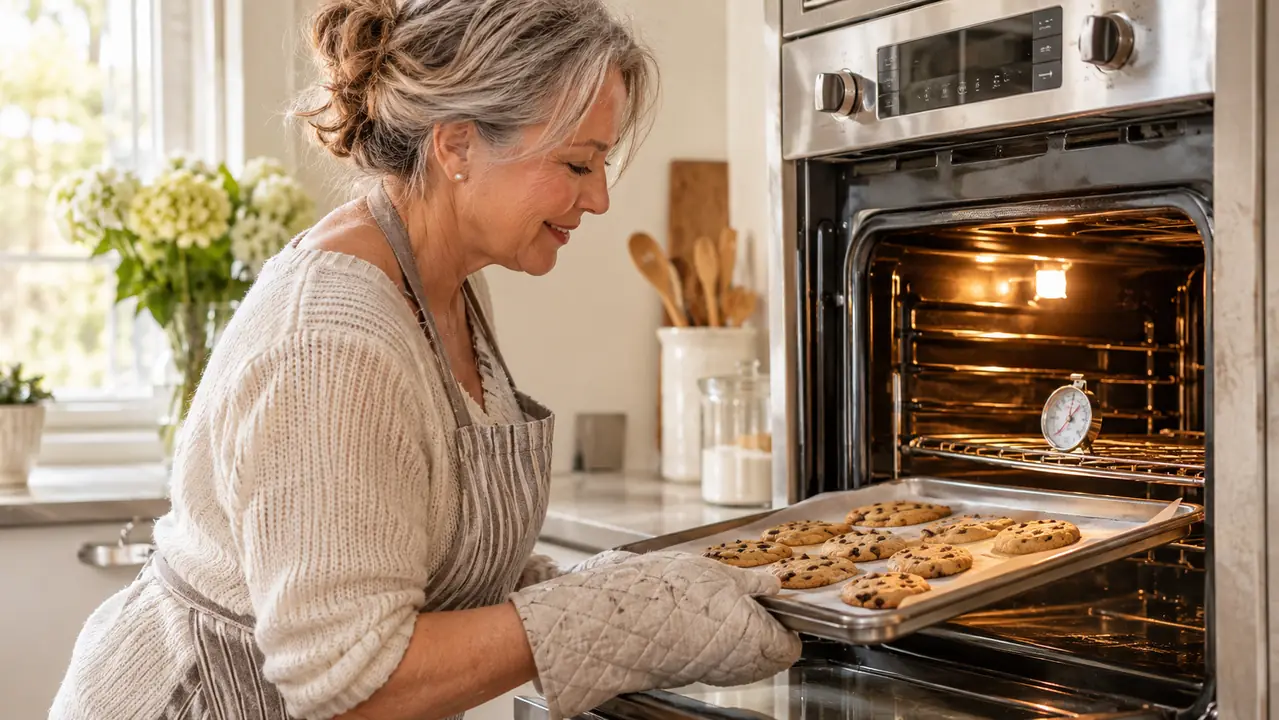
Our electric oven runs a little hot. I found that out one November when a double batch of sugar cookies came out with brown edges and pale middles, and the parish bake sale was two days away. The dial on the front of the stove said 350, but the oven was clearly doing something else. That is when I stopped trusting the oven and started trusting a thermometer. I have been baking for about thirty years, most weekends plus a big run of cookies and pies every November and December, and I can tell you the cheapest baking upgrade I ever made was a thermometer that tells the truth. I have used the Taylor analog oven thermometer, the 3 inch model, for many batches now, and I recently spent several weeks baking with the OXO version right beside it to answer one question: which dial is easier to read when you are holding a hot pan in one hand and the oven door is open?
If you want the short answer: for my eyes and my kitchen, the Taylor is the one I reach for. The dial is bigger, the markings are bolder, and the marked zones tell me at a glance where the temperature sits. The OXO is a good thermometer with a well-earned reputation, and it wins on a few points I will get to in a moment. But when the heat is rolling out of the oven and I have a tray in my other hand, the Taylor is the dial I can actually read. That is the whole comparison in one sentence.
| Taylor Analog Oven Thermometer | OXO Oven Thermometer | |
|---|---|---|
| Dial size | 3 inches across, one of the largest I have used | A good-size dial, though not as large |
| Markings | Large dial with clearly marked optimal cooking zones | Clean, high-contrast markings that read well up close |
| Temperature range | 100°F to 600°F, plus 50°C to 300°C on the same dial | Covers the usual range for home baking |
| Build | Stainless steel and glass, made for daily oven heat | Stainless steel with a comfortable, well-designed grip |
| Price | A modest price for a basic kitchen tool | Usually a bit more for the name |
| Guarantee | A straightforward tool, kept simple | OXO's well-known replacement promise |
| Where to buy | Easy to order online | Also found on store shelves |
| Best for | Bakers who want to read the dial from across the kitchen | Cooks who prefer buying in person and like a brand they know |
Here is how I compared them, because a comparison is only as good as its method. I baked with both thermometers through several weekends of cookies, a couple of loaves of bread, a ham for Sunday dinner, and the first batch of Christmas cookies. I set each thermometer on the middle rack of my standard electric oven, ran the same recipes at the same settings, and moved each one around to different racks to see whether position changed how easy it was to read. Ray will tell you I test things twice before I trust them, and this was no different.
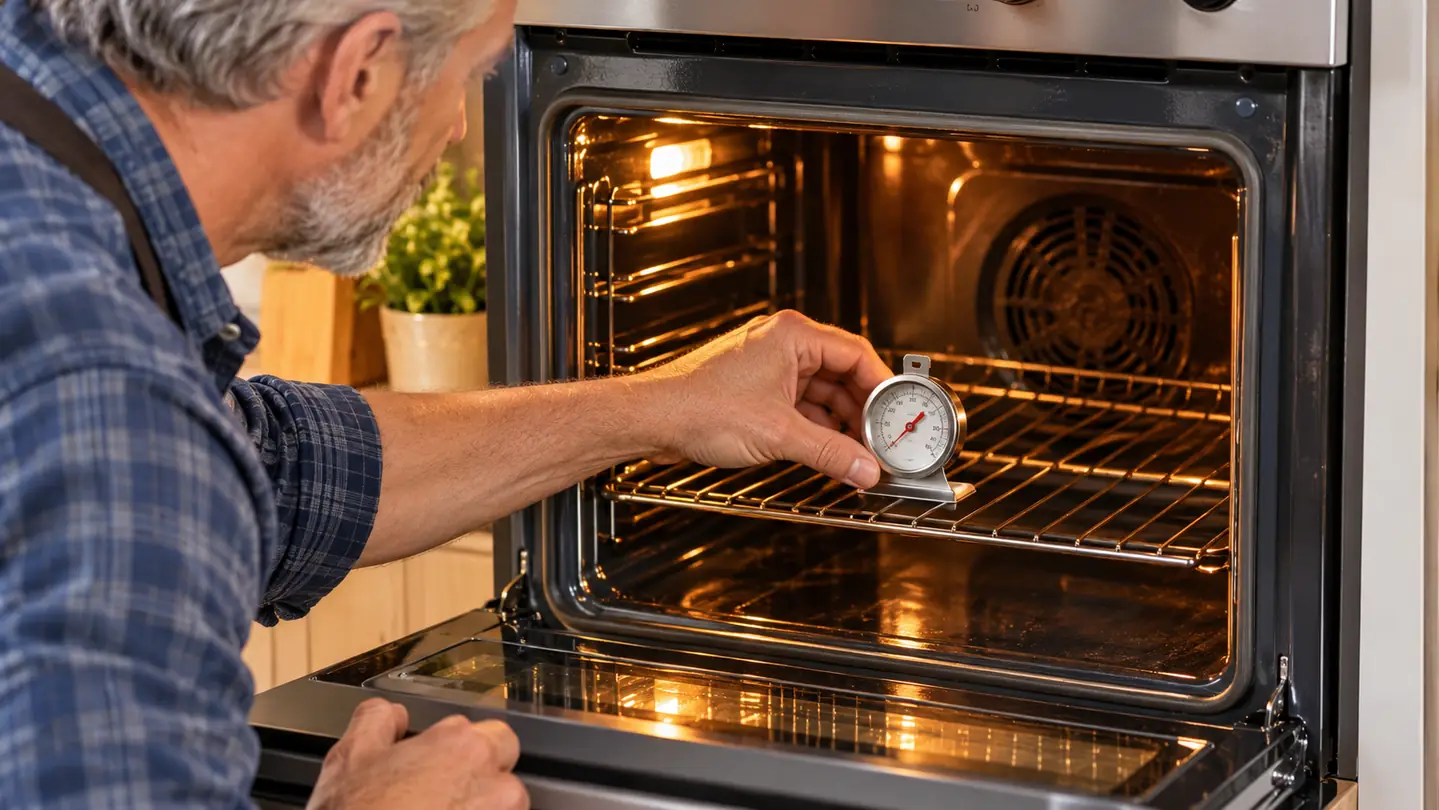
What I was really looking for was the moment of reading the dial. Would I have to lean in close? Could I glance at the needle from a step away? Did the needle settle quickly or keep drifting while I held the oven door open? I also checked both thermometers against the same oven at the same settings, back to back, to make sure I was comparing the dials and not two different ovens. The honest finding is that both thermometers agreed on the temperature. The difference was never the number. It was how fast my eye found it.
My kitchen is small, with limited counter space, so I do not have room for gadgets that need their own home. A thermometer that lives on the oven rack is perfect for me because it takes up no counter space at all. It goes in the oven, it stays there, and I never have to find a drawer for it. That is true of both of these, and it is one of the reasons I think every baker should have one.
Where Taylor Wins
The Taylor wins on the thing this comparison is about: readability at a glance. The dial is 3 inches across, which is large for an oven thermometer, and the markings are generous. It reads from 100°F to 600°F on the Fahrenheit side and from 50°C to 300°C on the Celsius side, so it covers everything from a slow roast to a hot oven for bread. The marked optimal cooking zones are the part I appreciate most. Instead of squinting at a number, I glance at where the needle sits and I know I am in the right neighborhood. When you are pulling a tray of cookies out of a hot oven with one hand, that is worth a lot.
The Taylor also settles quickly. The listing mentions a fast reading system with a response time of 500 milliseconds, and in practice that means the needle stops moving instead of drifting while I hold the oven door open. The resolution is 50 degrees, which sounds coarse until you remember you are checking an oven, not a candy thermometer. I do not need to know that the oven is at 347 degrees. I need to know that it is in the right zone, and the Taylor tells me that faster than any dial thermometer I have used. The stainless steel body has held up through many batches of my baking, and at 2.88 ounces it is light enough to sit on the rack without shifting. I keep it on the middle rack and I barely think about it until I need it.
The other thing I like is that the Taylor does not ask me to do any math. The marked zones on the dial are there for exactly the temperatures a home baker uses, so I do not have to remember that bread wants a hot oven or that a slow roast wants a low one. I just look at the needle and see which zone it is in. For someone who bakes as much as I do, that saves a little bit of thinking on every single batch.
The Celsius scale is a small thing, but I use it more than I expected. A few of my bread recipes give temperatures in Celsius, and being able to read both scales on the same dial means I do not have to convert anything in my head. The Taylor covers 50°C to 300°C, which is the whole range I need for bread and roasts. It is the kind of detail you do not think about until you need it, and then you are glad it is there.
Where OXO Wins
I want to be fair about the OXO, because it does a few things better. The first is the backing. OXO built its name on tools that last, and the replacement promise behind its oven thermometer is the kind of thing you appreciate when you have been baking as long as I have. If the thermometer fails, you are not out the money. That is a real point in its favor. The second is the grip. OXO made its reputation on comfortable handles, and the thermometer carries the same attention to how it feels in your hand when you move it from the drawer to the oven. Neither of those things changes how the dial reads, but they matter over the long run.
The OXO is also easier to find in person. Taylor is easy to order online, but if you want to hold the thermometer in your hand before you buy it, the OXO is the one you are more likely to see on a store shelf. There is something to be said for that. And I will admit the OXO dial is clean and easy to read up close. If you are the kind of cook who leans in to check the temperature, the difference between the two dials matters less. The OXO is not a worse thermometer. It is a different set of tradeoffs, and for some cooks those tradeoffs will be the right ones.
One more point in the OXO's favor: it looks quieter on the rack. The Taylor dial is busy in the best way, with zones and markings doing a lot of work. The OXO is more restrained, and if you prefer a cleaner look in your kitchen, you might enjoy that. It is a small thing, but small things are what a comparison like this comes down to.
The dial I can actually read
If your oven runs hot like mine, a thermometer you can read at a glance is the cheapest fix in the kitchen. The Taylor analog oven thermometer, 3 inch model, is the one that stays on my middle rack.
Amazon Check Today's Price on Amazon →Who Should Buy Which
Buy the Taylor if you are the kind of baker who has the oven door open, a tray in one hand, and a timer about to go off. Buy it if you want a dial you can read from across the kitchen, if you bake across a wide range of temperatures, or if you want the marked zones to do the thinking for you. Buy it if you want a sturdy stainless steel thermometer at a modest price and you are happy to order it online. That describes me, and I have no complaints.
Buy the OXO if you would rather buy in person, if the replacement promise matters to you, or if you simply like the brand. It is a good thermometer, and I would not talk anyone out of it. But I would tell them the same thing I tell everyone who asks about my setup: the best thermometer is the one you will actually use, and the one you can read without putting down what you are holding. For me, that is the Taylor.
And if you are still torn, think about the moment that matters most to you. If that moment is pulling a tray out of a hot oven and checking the temperature before the timer rings, buy the one with the bigger dial. If that moment is standing in a store aisle deciding between two good thermometers, buy the one whose brand you already trust. Both of those are honest answers.
A Few Practical Notes
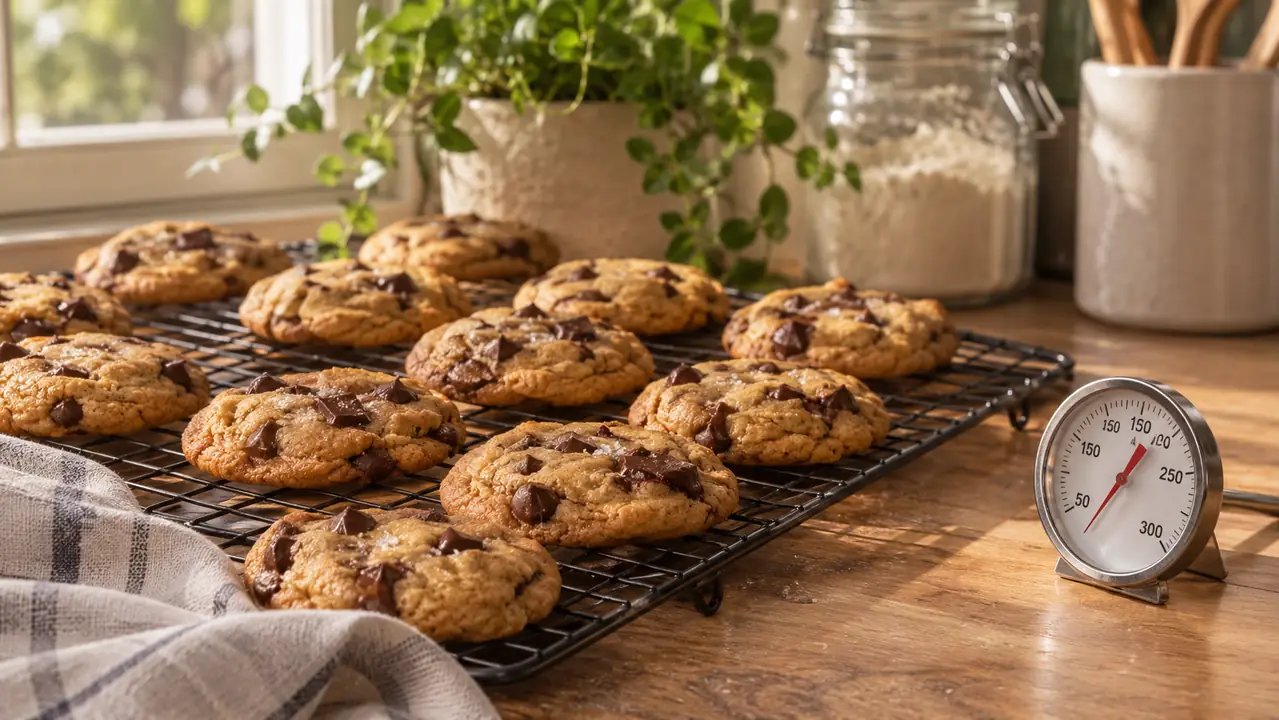
Whichever you choose, a couple of notes from my kitchen. Set the thermometer on the middle rack, toward the back, so it is out of the way of your pans but still easy to see. Check it against a known temperature every so often; I do mine when I am already heating the oven for bread. And do not put it in the dishwasher. The care instructions say to keep it out of the dishwasher, and a thermometer that has been through a wash cycle is a thermometer you cannot trust.
The other note is about expectations. A dial thermometer will not fix an oven that is wildly off. It will tell you the truth, and then you adjust. I set my oven a little lower than the recipe says because I know it runs hot, and the thermometer tells me when I have it right. That is the whole job, and both of these thermometers do it. The Taylor just makes the job easier to see.
The Bottom Line
If you are weighing the two, the honest summary is this. The OXO is a fine thermometer with a strong reputation and a guarantee that might matter to you. The Taylor is bigger, bolder, and easier to read, and it covers the full range of temperatures I use for baking. I keep the Taylor on the middle rack of my oven, and on the mornings when I am baking for Sunday dinner or getting ready for the bake sale, it is the dial I trust. If your oven runs hot like mine, that is the one I would start with.
Start with the dial you can read at a glance
One thermometer, one less thing to guess about. The Taylor analog oven thermometer is the one I recommend to anyone who bakes in a standard oven that runs hot.
Amazon Check Today's Price on Amazon →