
If your cookies keep browning on the bottom while the tops look pale, and your oven says 350 while the cake in the middle is still raw, you already know the problem. Your oven is lying to you. Mine has been doing it for years. I bought the Taylor analog oven thermometer about two years ago, after a batch of sugar cookies came out with bottoms the color of toast, and it has lived in my oven ever since. This is the honest version of that story, including the parts I did not expect and one thing that still annoys me every single time I bake.
The Quick Verdict
An accurate, easy-to-read thermometer that will tell you the truth about your oven. Just give it time to settle, and do not expect it to fix an oven that heats unevenly.
Amazon Check Today's Price →Find Out How Hot Your Oven Really Runs
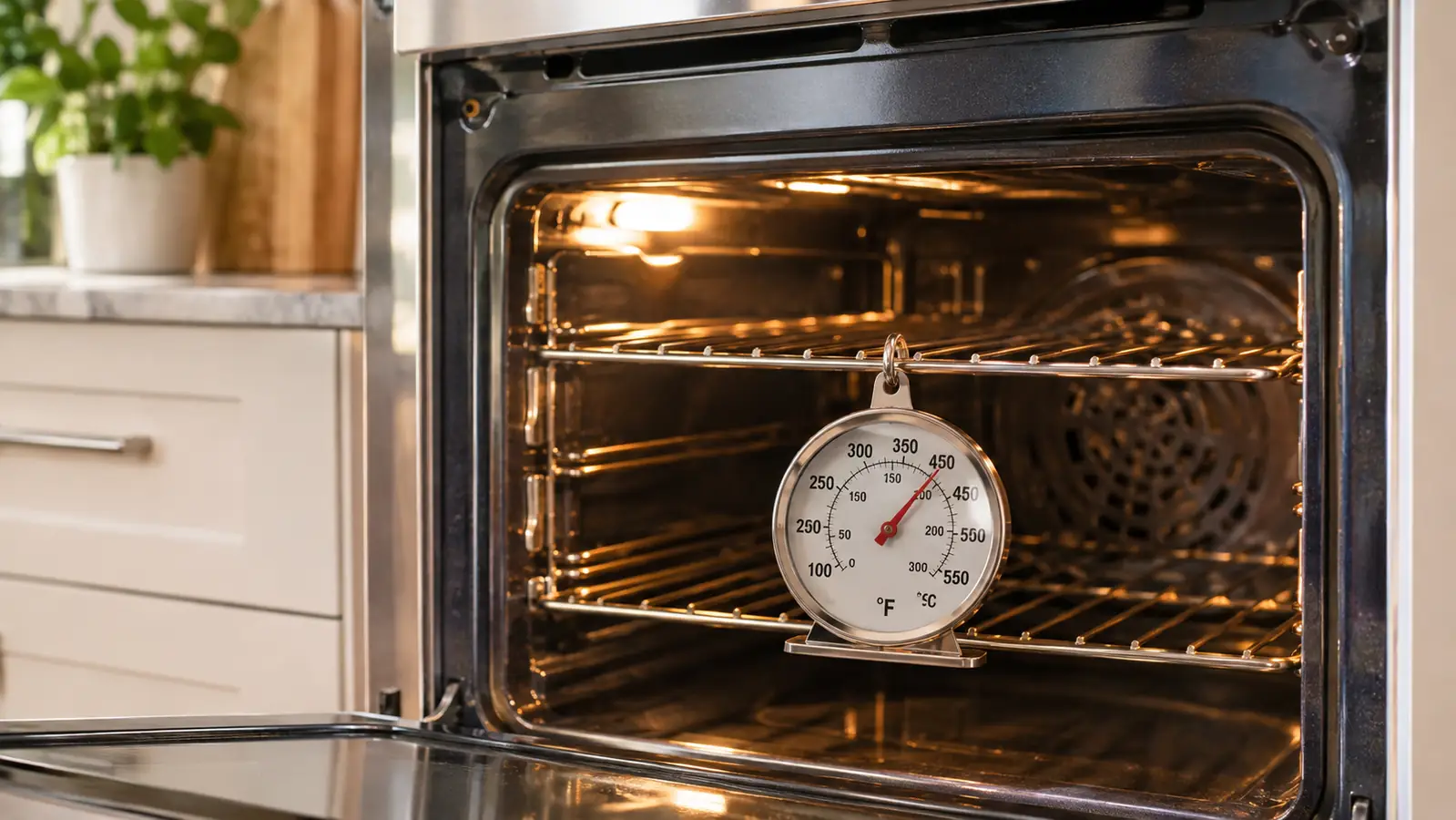
The Taylor analog oven thermometer reads from 100 F to 600 F, which covers everything I bake and then some. If your oven runs hot like mine, this is the fastest way to catch it.
Amazon Check Today's Price on Amazon →How I've Used It
I am Marlene Kowalski. I have baked for my family and for our parish bake sales for about thirty years, most of that in a small kitchen with one standard electric oven that runs about 15 degrees hot. I do not have a double oven and I do not have room for one. So when my cookies kept burning on the bottom, I did what I usually do: I bought a simple tool and tested it over many batches before I trusted it.
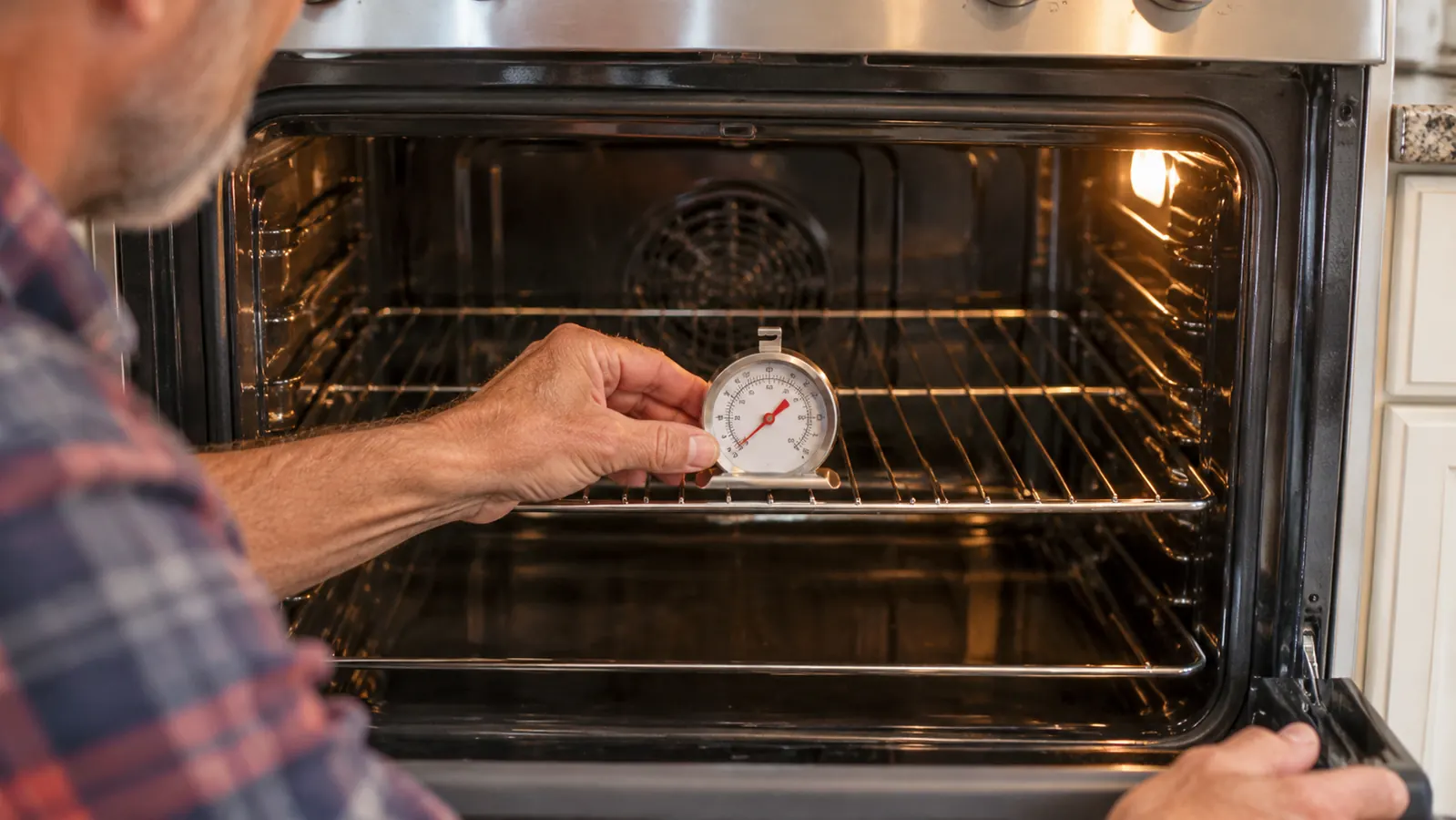
The Taylor thermometer has been in my oven for about two years now. I set it on the middle rack, toward the front, where I can see it through the glass without opening the door. I check it almost every time I bake. I have used it through two full holiday seasons, dozens of Sunday dinners, and more cookie batches than I can count. It has also sat in the drawer during the months I got lazy, and it went right back to work when I pulled it out again. The week I bought it, I made three batches of sugar cookies, a pound cake, and a pan of brownies, just to see whether the readings matched what the baked goods were telling me. They did. The cookies that had been burning on the bottom came out pale and even when I set the oven dial to match what the Taylor showed.
What nobody tells you is that this is a thermometer you have to learn to read in motion. It is not instant. You put it in a cold oven, close the door, and it starts climbing, but it lags behind the oven's own reading. The first time I used it, I watched it sit at 250 while my oven claimed 350, and I nearly wrote it off as broken. Give it a full preheat and then some, and it settles into a number you can trust. That took me a few batches to figure out, and it is the main reason this review is not five stars.
I keep a small notebook on the shelf above my hand mixer, and for the first month I wrote down what the oven dial said, what the Taylor said, and what came out of the oven. That notebook is how I learned that my oven runs about 15 degrees hot on the middle rack and a touch hotter on the bottom rack. The Taylor does not have a memory and it does not keep notes, but it does not need to. I am the one who keeps the notes, and the thermometer gives me the numbers to write down.
What Nobody Tells You About the Dial
The selling point is the large, colorful dial with clearly marked zones, and I will say this for it: it really is easy to read. I am 58 years old and I do not squint at this thermometer the way I squint at the little numbers on the oven knob. I can glance at it from across the kitchen and tell whether it is in the right neighborhood. The markings are not fine and fussy. They are bold, and for someone who bakes with her glasses on top of her head, that matters.
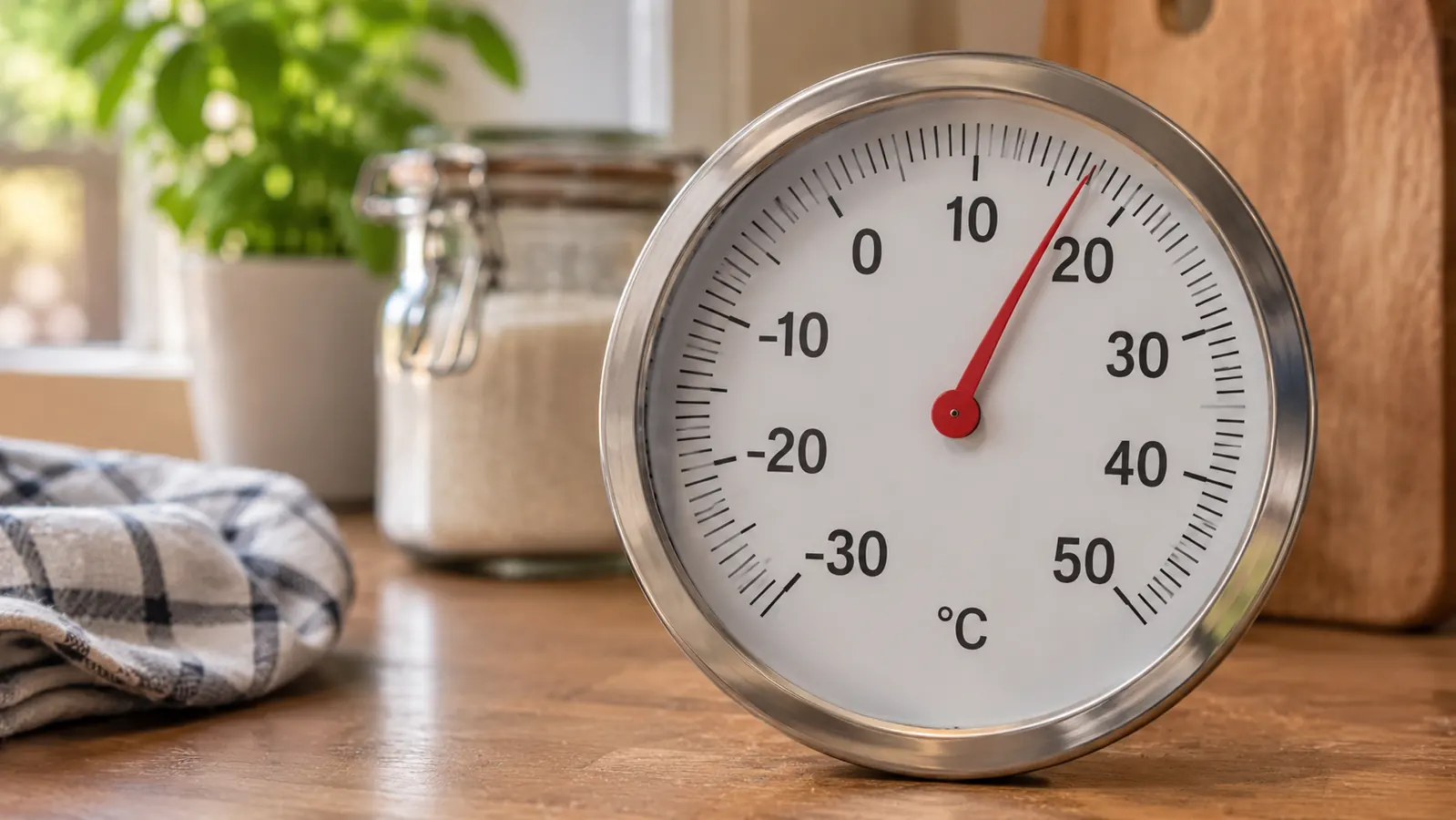
But here is the honest part. The dial resolution is 50 degrees. That means the marks on the dial are fairly coarse, and you are estimating between them. When the thermometer settles, I can tell that my oven is somewhere around 365 to 375, not that it is exactly 370. For baking, that is usually good enough. For anything that needs a precise temperature, it is a reminder that this is a tool for catching a problem, not a laboratory instrument. The dial also shows Celsius, which I never use but appreciate having. And because the numbers are printed large, I can read them from the kitchen doorway while the oven is closed, which is more than I can say for the little marks on my oven's own dial.
The other thing nobody tells you is that it takes a while to settle. The listing says it has a fast reading system and a response time of 500 milliseconds, which sounds instant. In practice, that response time is about how quickly it starts to react to a change in temperature, not about the needle arriving at the final number. In a real oven, with the door opening and closing and the heating element cycling, the needle moves, pauses, and creeps. You learn to read it after the oven has been closed and quiet for a few minutes. The first few times I used it, I opened the door to check, watched the needle drop, and then had to wait for it to climb back up. Now I know better.
One more thing about the dial: it is not backlit. If you bake in a dark kitchen, you will need whatever light your oven has. Mine has a small oven light, and that is enough to read the Taylor through the glass. But do not expect it to glow in the dark. It is a simple tool, and simple tools have simple limitations.
The first time I used it, I watched it sit at 250 while my oven claimed 350, and I nearly wrote it off as broken.
How Accurate Is It, Really
I tested it the way I test most things: by baking. When the thermometer showed my oven running hot, I lowered the dial to match, and my cookies stopped burning on the bottom. That is the practical test, and it passed. I also did the boiling water check you read about, and the thermometer read 212 F, which is exactly right at sea level. Northern New Jersey is close enough to sea level that I trust that number. On a typical Saturday morning, I set the oven dial to 350, wait for the preheat beep, then give the thermometer another five minutes. It usually settles at 365, which matches the 15 degrees hot I suspected all along.
The range on the dial goes from 100 F to 600 F, which is more than enough for anything I bake. The stainless steel body has held up through two years of daily use, including the humidity of a holiday kitchen when I have three things in the oven at once. It has never warped, rusted, or fogged up. The glass face still looks as clear as the day I bought it. I have dropped it once, when I was pulling a sheet pan out in a hurry, and it landed on the kitchen floor. I expected the glass to shatter. It did not. I put it back on the rack and it read the same as before.
What it will not do is fix an uneven oven. My oven runs hot on the bottom and the back corner runs hotter still. The thermometer tells me the average temperature at the rack, and that is genuinely useful. It does not tell me that the left side of the sheet is browning faster. For that, I still rotate my pans halfway through, and I use the thermometer to set the oven right in the first place. If I did not rotate, the Taylor would still be honest with me, but the cookies would not be.
I have also used it to check my oven before the big holiday bake. Last December, the day I made the first batch of Christmas cookie dough, I set the oven to 375 for the cookie sheets and the Taylor read 390 after fifteen minutes. I turned the dial down to 355, and the cookies came out the way they always do when the oven is behaving. Without the Taylor, I would have blamed the recipe, or the flour, or the fact that I was rushing. It was the oven. The Taylor told me that before I wasted a single egg.
The Annoying Part: Patience
I will be honest with you. The slow settling is the thing that still gets me. I am used to my digital scale giving me a number the instant it is ready, and my hand mixer does not make me wait. This thermometer makes me wait. If I am in a hurry and I peek at it two minutes after the oven beeps, I get a reading that is lower than reality, and I have to resist the urge to crank the oven up. One Sunday, with the roast in and the clock ticking, I turned the oven up to 375 because the thermometer said 325. Twenty minutes later the thermometer read 400 and the roast was browning too fast. The thermometer was right all along. I was the one who was impatient.
The fix is simple, and it is a habit now. I turn the oven on, put the thermometer on the rack, and go prep my pans. By the time the dough is ready, the thermometer has settled and I know exactly where things stand. If you are the kind of baker who wants to preheat and go, this thermometer will test your patience exactly once, and then you will learn the rhythm. It also helps to remember that the needle moves in response to the air around it, and the air in a real oven is always moving. A little wander is normal. What matters is where it lands after the oven has been closed for a few minutes.
The other small annoyance is that it is an analog thermometer in a digital world. There is no beep, no light, no app, and no way to set an alarm. If you want a thermometer that beeps at you, this is not it. If you want a simple, honest reading that you can glance at while your hands are covered in flour, this is exactly it. My daughter asked me if it connected to her phone, and I laughed. It does not connect to anything. It just sits there and tells the truth.
I will also say that the needle does not always land on a mark. It often sits between 350 and 400, which means I am making a judgment call. Over time I have learned that if it is closer to the 400 side, I should turn the oven down a notch. That is not a feature you will find in any listing. It is just what you learn when you use the same thermometer for two years.
What I Liked
- Easy to read from across the kitchen, even for someone who usually needs reading glasses
- Accurate once it settles; it caught my oven running about 15 degrees hot
- Reads from 100 F to 600 F, with Celsius on the same dial
- Stainless steel body and glass face have held up through two years of daily use
- Simple, no setup, and no settings to fiddle with
Where It Falls Short
- Slow to settle; the needle lags behind the oven and creeps for several minutes
- 50-degree resolution means you are estimating between the marks
- Measures the air in the oven, not the temperature of the food
- Will not fix an oven that heats unevenly
- No beep or alarm for bakers who want a digital readout
Who This Is For
This thermometer is for anyone who suspects their oven is lying to them. If your cakes dome in the middle, your cookies burn on the bottom, or your oven takes forever to brown the top of a casserole, you need to know your actual oven temperature before you change anything else about your baking. This is the simplest way to find out, and it is the tool I reach for every single weekend.
It is also for people who bake in a small kitchen like mine, where you do not have room for a drawer full of gadgets. This thermometer takes up no space. It sits on the rack while the oven is on, and it lives in a drawer when the oven is off. It does one thing, it does it well, and it has not worn out in two years. If you bake once a week or once a month, this thermometer will still pay for itself in the first batch you do not ruin. I used to throw away burnt bottoms and dry edges more often than I want to admit. In the two years since I started using the Taylor, I have thrown away exactly two batches, and both were my fault, not the oven's.
Who Should Skip It
Skip it if you want instant digital accuracy. This thermometer is accurate, but it is not instant, and if you will not give it a few minutes to settle, you will not trust it. Skip it if you need to measure the temperature of the food itself, like a roast or a turkey. This measures the air temperature in the oven, not the food. For that, you want a probe thermometer that goes into the meat.
And if your oven is wildly uneven, where one side burns and the other side is raw, this thermometer will tell you the average but it will not fix the hot spots. You might need an oven repair or a different baking strategy. The Taylor will confirm the problem, and then you still have to solve it. One more group should skip it: anyone who will not bother to read it. If you are not going to look at the thermometer and adjust your oven dial, it is just another thing sitting on the rack. The Taylor does not adjust the oven for you. It only tells you the truth, and it is up to you to use it.
The Truth About Your Oven, Before You Blame the Recipe
Two years in, the Taylor analog oven thermometer is still the first thing I check before I bake. It is easy to read, it is honest, and it caught an oven that was running 15 degrees hot.
Amazon Check Today's Price on Amazon →